Now Reading: Do Dogs Understand Humans? How Dogs Really Think and Feel
- 01
Do Dogs Understand Humans? How Dogs Really Think and Feel

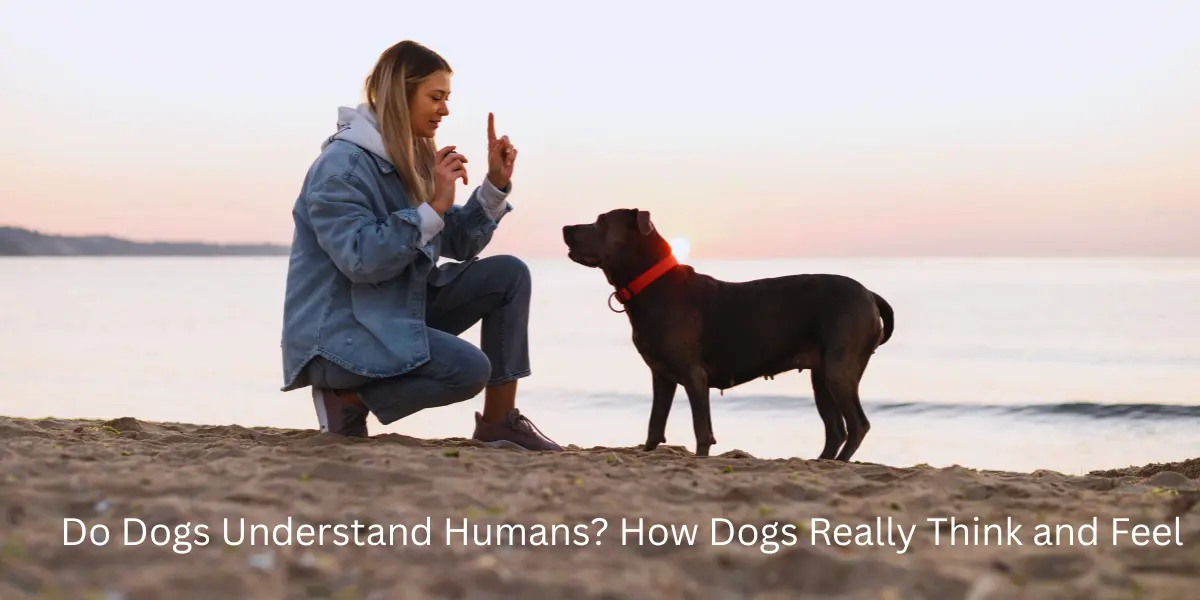
Yes, dogs do understand humans, but not in the same way humans understand each other. Dogs don’t process language, grammar, or complex sentences. Instead, they understand tone of voice, body language, facial expressions, routines, and emotional signals. Their understanding is practical, emotional, and learned through experience.
When people ask this question, what they really want to know is simple: “Does my dog get me?”
The answer is comforting, dogs understand more than we think, just differently than we expect.
Do Dogs Understand Humans?
Yes, dogs understand humans through tone, body language, routines, and emotional cues, not through language or logic. Their understanding is learned, emotional, and practical, shaped by experience and daily interaction with people.
What “Understanding” Means for Dogs
For humans, understanding usually means words and logic. For dogs, understanding means patterns and outcomes.
Dogs are experts at:
- Associating actions with results
- Reading emotional energy
- Recognizing repeated sounds and movements
- Predicting what happens next
This ability comes from domestication. Over thousands of years, dogs that could read humans survived better. Today’s dogs are highly tuned to human behavior, which is why training a dog to listen works best when it follows how dogs naturally learn and respond.
How Dogs Understand Humans (Step by Step)
Dogs use multiple channels simultaneously. That is why mixed signals confuse them.
- Tone of Voice
Tone matters more than words.
A happy, calm tone signals safety and reward.
A sharp or angry tone signals danger or stress.
Even if you say “good dog” in an angry voice, your dog will feel uneasy. Dogs process emotional tone faster than meaning.
- Body Language
Dogs read posture better than speech.
They notice:
- How you stand or move
- Hand gestures
- Speed of movement
- Tension or relaxation in your body
A relaxed body invites trust. A stiff posture signals caution.
- Facial Expressions
Dogs can tell the difference between:
- Smiling
- Angry
- Sad
- Neutral faces
They may not understand why you feel that way, but they sense the emotion and respond to it.
- Word Association
Dogs don’t understand language, but they learn words through repetition.
For example:
- Sit = action → reward
- Walk = leash → outside → fun
Some dogs are capable of learning dozens, and in some cases, even hundreds of words. But these are learned sounds, not language comprehension.
- Context and Routine
Dogs are excellent at reading routines.
They know:
- When you usually leave
- When meals happen
- When do walks usually start
Often, dogs respond before you say anything because the situation already makes sense to them.
Do Dogs Understand Human Emotions?
Yes. Dogs are very good at emotional recognition.
Dogs can sense happiness, sadness, stress, anger, and fear
They respond through behavior, staying close, acting calm, becoming alert, or avoiding conflict.
This emotional sensitivity is linked to oxytocin, the bonding hormone. When dogs and humans interact positively, oxytocin increases in both, strengthening trust and attachment.
Do Dogs Understand Words or Just Tone?
Dogs understand both, but tone comes first.
Here’s a simple comparison:
| Communication Type | How Dogs Process It |
| Tone of voice | Very strong impact
|
| Body language | Strong impact
|
| Facial expressions | Moderate impact
|
| Words | Learned through repetition
|
| Full sentences | Not understood
|
If tone and words don’t match, dogs trust the tone. This explains why yelling commands often fails. The emotional message overpowers the instruction.
Dog Brain vs Human Brain
Dogs and humans think differently.
- Human brains focus on language and logic
- Dog brains focus on emotion and association
Studies in canine cognition, including brain imaging research at Emory University led by Dr. Gregory Berns, show that dogs process human voices in areas linked to emotion rather than language.
This confirms what owners see every day: dogs feel what we mean before they process what we say.
Why Tone Beats Words
Tone beats words because:
- Emotion is faster than language
- Dogs evolved to read moods for survival
- Tone predicts outcomes (reward or danger)
That is why calm, clear communication works better than repeated commands.
Do Dogs Understand When You Talk to Them?
Dogs don’t understand full conversations, but they do understand:
- Familiar words
- Emotional tone
- Attention and intent
Talking calmly helps bonding. Talking angrily increases stress. Talking constantly without meaning often gets ignored. Dogs listen for patterns, not explanations.
Why Dogs Tilt Their Head When You Talk
Head tilting helps dogs:
- Focus on sounds
- Adjust ear position
- Read facial cues better
It often means the dog is engaged and trying to understand.
Can Dogs Understand Sentences?
No. Dogs don’t understand sentence structure.
They may recognize one or two familiar words, Emotional tone, and Situation context.
Long explanations confuse dogs. Short, clear cues work best.
Can Dogs Feel Empathy?
Dogs show empathy-like behavior.
They may:
- Sit near someone sad
- Lick or nudge gently
- Stay calm when humans are upset
While dogs may not feel empathy exactly like humans, they respond to emotional states in supportive ways.
Why Dogs Sometimes Ignore Commands
Ignoring commands doesn’t mean a dog is stubborn or unintelligent.
Common reasons include:
- Mixed signals
- Inconsistent rules
- Emotional stress
- Poor timing of rewards
- Too much talking
Often, it’s a communication failure—not disobedience.
Training Implications: How to Communicate Better with Dogs
Better understanding leads to better behavior.
Simple Communication Framework
Clarity + Consistency + Calm Emotion
Practical Tips
- Use one word per command
- Keep tone calm and confident
- Pair words with gestures
- Reward immediately
- Stay consistent across people
Positive reinforcement works best because dogs learn through associative learning, not fear.
Common Mistakes Humans Make
Many behavior problems come from human misunderstanding.
Common mistakes include:
- Talking too much
- Using different commands for the same action
- Showing frustration without clarity
- Expecting dogs to “just know.”
- Punishing after the moment has passed
Dogs live in the present. Timing matters.
Communication Failures vs Disobedience
What looks like disobedience is often confusion.
Ask yourself:
- Was my signal clear?
- Did my tone match my words?
- Does my dog already understand this cue?
When communication improves, behavior usually improves too.
Safety and Emotional Well-Being
Misunderstanding dogs can cause emotional stress.
Avoid:
- Yelling
- Punishment-based training
- Assuming bad intentions
Dogs respond best to calm guidance and predictable signals.
Real-Life Example
A dog ignores the command “come” at the park.
Possible reasons:
- Too many distractions
- Command used without reward before
- Tone sounds angry or urgent
- Recall not fully trained
The solution is not punishment—it’s clearer training in low-distraction settings.
Why This Understanding Matters
Understanding how dogs think helps:
- Build trust
- Improve training
- Reduce frustration
- Strengthen emotional bonds
Dogs aren’t trying to challenge humans. They are trying to interpret us the best way they know how.
What This Means for You and Your Dog
Dogs understand humans through emotion, tone, movement, and experience,not language or logic. When we communicate clearly and calmly, dogs respond with trust and cooperation. The better we understand how dogs think, the stronger and happier the human-dog bond becomes.
FAQ’s
Q: Do Dogs Understand Human Language?
Dogs don’t understand language the way humans do, but they learn words through repetition and association.
Q: Do Dogs Know their Name?
Yes. Dogs learn their name as a sound linked to attention or reward.
Q: Do Dogs Understand Yelling?
Dogs understand the emotion behind yelling, not the instruction. Yelling often causes stress.
Q: Can Dogs Sense When you are Sad?
Yes. Dogs are susceptible to emotional changes in humans.
Q: How Many Words can Dogs Understand?
Some dogs can learn dozens or even hundreds of words through training.
Q: Do Dogs Understand Facial Expressions?
Yes. Dogs can recognize basic human facial emotions.
Q: Are Some Dogs Better at Understanding Humans?
Working and companion breeds often show stronger human-focused communication skills.
Veterinary Disclaimer: This article is for educational purposes only and does not replace professional veterinary advice. If your dog has eaten something potentially harmful, contact your veterinarian or the ASPCA Animal Poison Control Center at (888) 426-4435 immediately.
About the Author
Faizan is the founder and writer behind Complete Dog Guide, a blog dedicated to helping dog owners with practical, well-researched information on dog food, care, grooming, and training. With 5 years of experience in content writing and blogging, he spends hours digging through veterinary publications, official guidelines from organizations like the ASPCA, AKC, AAFCO, and the Merck Veterinary Manual to make sure every article is backed by reliable sources.
Complete Dog Guide does not provide veterinary advice. Every health-related article on this site is researched using published veterinary data and clearly cites its sources. If your dog has eaten something harmful, always contact your veterinarian first.