Now Reading: 7 DIY Brain Games for Dogs Stuck Inside | Vet-Approved Indoor Enrichment
- 01
7 DIY Brain Games for Dogs Stuck Inside | Vet-Approved Indoor Enrichment

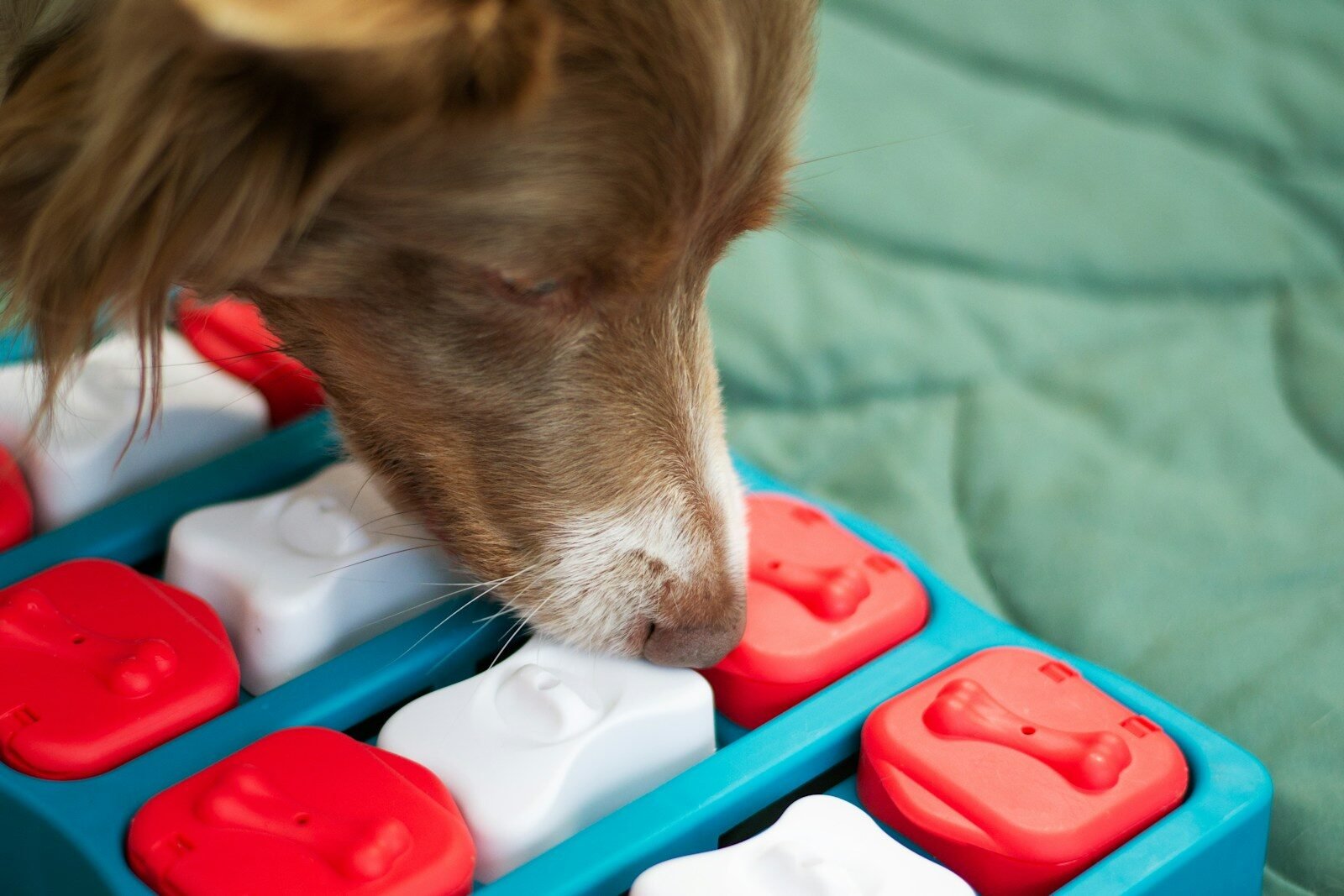
Last weekend, my neighbour told me that during thunderstorms, her golden retriever chewed through an entire couch cushion. But it wasn’t because he was scared; it was because he was bored. I did not find this surprising. There’s a big difference between a physically tired dog and a mentally exhausted dog. And for most pet owners, it seems they only care about the first type.
A 2022 study published in Applied Animal Behaviour Science found that when compared to control groups, dogs participating in regular cognitive stimulation had significantly less occurrence of stress-related behaviours such as extreme barking, destruction due to boredom, and hyperactivity (Duranton & Horowitz, 2022). Veterinary behaviourist Dr. E’lise Christensen also states that even just ten minutes of structured nose work will be able to deplete the same amount of mental energy as a moderate walk.
The following are seven brain games that you could create within 5 min utilizing items from around your house. Each brain game includes a description of its difficulty level, a step-by-step guide, and a progression tip, which enables the difficulty level of each game to grow as your dog grows.
1. The Layered Towel Dig
Difficulty: Beginner | Setup: 90 seconds | You need: One old bath towel and a handful of kibble
Lay the towel out flat on a smooth surface. Place a couple of kibbles from the bag onto the towel. Fold the towel in half over the kibbles. Layer some additional small amounts of kibbles on top. Fold the towel in half again. The towel should be folded in three or four sections. Kibbles will be hidden in each section of the towel.
To find the kibbles, your dog is going to use their paws, nose, and also flip the different sections of the towel. At first glance, this appears to be an easy task for your dog. However, your dog’s sense of smell (to track scents) as well as problem-solving skills are being used simultaneously.
Progression tips: Take the towel and twist it into a loose knot that holds some kibbles inside. The twisting action of the towel limits how easily your dog can pull it open versus manipulating the fabric. Keep the folding loose if your dog is an older pup or puppy. Allow them to gain confidence in navigating through the layers before increasing the complexity of the folds.
2. Cardboard Sniff Box
Difficulty: Beginner | Setup: 3 minutes | You need: A shipping box, crumpled paper, a few small treats
Take a cardboard box that you have somewhere. Pack it lightly with crumpled paper, packing paper, newspaper, or paper towels. Add treats to different levels within the packed paper. Close the flaps but do not seal them.
What sets this apart from throwing a treat onto the floor is the increased sensory experience. The treats are buried under rustling paper; your dog will need to use their senses to follow scents as they layer themselves and determine if they should dig into the top or nudge from the side. As such, this type of multi-sensory foraging mimics how dogs would naturally find food in nature.
Progression tips: Take each treat individually and wrap it in a small piece of paper (make small “balls”), then add them to the box. Alternatively, place an additional smaller box inside the large box, which also contains another hidden treat, thus making it a two-part puzzle.
Note: Avoid using magazines that contain gloss or staples, and remove all shredded materials after playtime to avoid ingestion.
3. Muffin Tin Scent Challenge
Difficulty: Beginner to Intermediate | Setup: 2 minutes | You need: A 6- or 12-cup muffin tin, tennis balls, treats
This is one of the most well-known brain games for a good reason. It works. Put a treat in each muffin cup and cover all of them with tennis balls. Your dog has to remove each ball to get to the food underneath.
Where most guides stop, that is where this game becomes interesting. Once you have taught your dog how to play the game as described above, then only bait three out of twelve cups, but keep all twelve covers over the cups. Now it stops being a physical game and becomes an exercise in sensory discrimination through smell.
Your dog will have to choose which cups are worth examining solely based on smell.
Progression tip: Hold the tin firm while your dog works. Some dogs attempt to flip the entire tin in one move, which defeats the purpose. By holding the tin, they will learn to work methodically rather than brute-force their way through.
For small breeds, use a mini muffin pan with appropriate-sized balls. Never use balls that can be swallowed by your dog
4. The Which-Hand Test
Difficulty: Intermediate | Setup: None | You need: A small, smelly treat and your two hands
The first trick on this list is easy and is often overlooked as an amazing mental trainer. Put a treat inside one fist; hold out both fists for your dog to find with her nose. She will have to choose either of the two fists. When she chooses the fist containing the treat by touching the fist with her head (nose), or by putting her paw on the fist, or by sitting in front of it. Open the fist. Reward your dog if she chose correctly (the treat is hers). If she chose incorrectly, present the correct hand for a moment, then shut it up. The process starts all over again.
In reality, what this trick really does is teach impulse control. Your dog is learning to make a conscious decision when to take action versus reacting to two stimuli. In time, as you do this exercise repeatedly, you will see your dog stop to smell each hand longer before committing. The “pause” is the ultimate goal of this trick. It shows your dog has taken a moment to think about her next step before taking that next step. A skill that will translate directly to every other area of training.
Progression tip: Once your dog always picks the correct hand, add a brief wait after opening your fist, and while you are holding out your fists for your dog to choose from. This adds a test of working memory, a higher level of cognition than just simple impulse control.
5. Frozen Enrichment Bowl
Difficulty: Intermediate | Setup: 5 minutes + 4 hours freezing | You need: A bowl or silicone mold, kibble, plain yogurt or low-sodium broth, a few blueberries or banana slices
Spread a very thin layer of plain yogurt or broth in the bottom of a bowl. Put down a thin layer of your dog’s kibble and add a couple of fruit pieces. Add another very thin layer of liquid. Continue doing this until you have filled up the entire bowl. Then place it in the freezer for at least 4 hours.
When you remove the bowl from the freezer, what you will see is a big piece of ice that your dog has to lick, chew, and break apart to get to all the food inside. How long this takes depends on how large your dog is; somewhere between 15 and 45 minutes.
Because most dogs are born with an instinctual desire to eat by licking, research conducted at the University of Lincoln (U.K.) has proven that this action causes the release of endorphin chemicals into their system, which reduces their overall level of stress. Because of this, this “Frozen Enrichment Bowl” would be a great way to provide anxiety relief for dogs that become anxious when they are left alone or for dogs that are recovering from surgery because they require slow movement stimulation.
Homemade Dog Food Recipes That Are Actually Safe: Read Now
6. Room-to-Room Scent Trail
Difficulty: Intermediate to Advanced | Setup: 3 minutes | You need: High-value treats (freeze-dried liver, small cheese cubes, or cooked chicken) and access to at least two rooms
Have your dog wait in one area, such as a room; alternatively, have someone hold your dog. From the doorway, lay down treats on the floor leading into an adjacent room. Initially, keep the treats two feet apart. Finally, end the trail with a “jackpot” reward, which is anything beyond ordinary and especially valuable to your dog, for example, several pieces of real chicken or your dog’s ultimate reward.
The Scent Trail Game utilizes a dog’s strongest sensory perception. According to research provided by the American Kennel Club, dogs contain anywhere between 250 and 300 million olfactory receptors, while humans have approximately six million. Therefore, when you have a dog track a scent trail, you provide them with focused work that their brain is designed to do.
Progressive Tip: Once your dog has successfully followed each treat, continue to increase the distance between each treat until your dog can follow a scent trail of six to eight feet. Next, you can develop a trail that runs around a corner, and/or through doorways with no additional visible rewards along the trail. The final reward will be the scent trail itself.
7. The Blanket Escape
Difficulty: Advanced | Setup: 1 minute | You need: A lightweight blanket and a few treats
Throw some treats on the ground. Hang a blanket loosely over you and the treats. Your dog will have to find a way to get out from underneath the blanket to find the treats. The number of ways dogs solve this is amazing. Some dogs simply slide backward as soon as the blanket comes down. Other dogs push their noses into the fabric looking for treats. A couple of other dogs try to get to the edges of the blanket and yank it down. All approaches are correct.
The reason this is such a difficult game for most dogs is that they must use two skills at once. They need to be able to escape from the blanket (spatial problem solving) and then sniff out where the treats were placed when they escaped (scent work). Also, if your dog was hesitant about being covered by the blanket, this activity will help build his/her confidence.
If your dog gets good at this game, use a thicker blanket or drape the blanket closer to your body. Before putting the blanket over your dog, place treats all around the area of the house first, so he/she will have to hunt for the treats when she/he escapes.
Important: If your dog starts to panic, whine, freeze up, or pant heavily while playing this game, take the blanket away. This game should be enjoyable for your dog, not a scary experience.
Quick Comparison: All 7 Games
| Game | Level | Setup | Cost | Best For |
| Layered Towel Dig | Beginner | 90 sec | $0 | Puppies, seniors |
| Cardboard Sniff Box | Beginner | 3 min | $0 | Foragers, all breeds |
| Muffin Tin Scent | Beg–Int | 2 min | $0–5 | Scent training |
| Which-Hand Test | Inter. | 0 min | $0 | Impulse control |
| Frozen Enrichment | Inter. | 5 min+ | $0–3 | Anxious dogs, hot days |
| Room Scent Trail | Int–Adv | 3 min | $0 | High-energy breeds |
| Blanket Escape | Advanced | 1 min | $0 | Confident dogs |
Safety Rules That Actually Matter
Enrichment should never feel like a risk. These four rules keep things safe:
Rule #1: Always supervise your pet during play. Interactive activities that require the assistance of a person cannot replace leaving alone toys. While cardboard, paper, and fabric can become dangerous items when consumed by pets (as they may cause an intestinal obstruction), no evidence that shredding these items will provide long-term enjoyment for your pet.
Rule #2: When using enrichment as a method of mental stimulation, end the activity on a positive note. If your pet walks away from a particular activity or appears frustrated, then the activity was too difficult. It would be best to simplify the task immediately. As stated previously, frustration is not enrichment.
Rule #3: Be aware of how much food you use as treats in enrichment. If you do not count the amount of food used in enrichment towards their total daily rations, then you could potentially be over-feeding your pet.
Rule #4: Clean up after each session. Shredded cardboard, loose paper, and fabric strips are potential sources of harm to your pet.
If you have tried to enrich your pet’s life but see no improvement in the destructive behaviour or anxiety exhibited by your pet, then consult with your veterinarian. Persistent changes in a pet’s behaviour can be indicative of a variety of different issues, such as cognitive decline in older animals or chronic pain that has gone undetected.
Frequently Asked Questions
How many minutes should you spend on each of your brain games?
The general rule for most dogs is to keep the first set of brain games at 10 to 15 minutes. Brain games can be quite exhausting to your dog, and it’s best to provide them with two shorter sets of games during the course of the day. The best times for this would be morning and afternoon. Don’t feel bad if your dog gets bored and doesn’t want to continue playing a particular game after 10-15 minutes. Just end the session because he was having fun.
Can my puppy do these games?
Yes, you can begin using some of the beginner games with your puppy when he reaches about eight weeks of age. It is suggested to stick to games such as “towel dig” and “sniff box.” Also, be sure to limit the length of the games to 5 minutes. Puppies will often lose interest very fast, but their attention span will also usually diminish before they become frustrated. Brain games that you give to your puppy early in his life will help him develop problem-solving skills that will be helpful throughout his entire life.
Are brain games a replacement for regular walking?
No. Regular physical exercise and mental stimulation are two separate functions, and your dog needs both. Think of brain games as an additional way of providing mental stimulation to your dog on those days when he may not receive much or any physical exercise outside of the home. This could include days when inclement weather prevents him from going out, he is recovering from surgery, or he has limited mobility.
Final Thought
The single best thing about brain games is that they change your dog’s relationship with indoor time. Instead of pacing by the door or staring out the window, a mentally stimulated dog settles down, rests, and actually enjoys being home. That shift does not require expensive equipment or professional training. It just takes a towel, a cardboard box, and five minutes of your attention.
Your dog already has the nose, the curiosity, and the drive. All you need to do is give them a reason to use it.
Veterinary Disclaimer: This article is for educational purposes only and does not replace professional veterinary advice. If your dog has eaten something potentially harmful, contact your veterinarian or the ASPCA Animal Poison Control Center at (888) 426-4435 immediately.
About the Author
Faizan is the founder and writer behind Complete Dog Guide, a blog dedicated to helping dog owners with practical, well-researched information on dog food, care, grooming, and training. With 5 years of experience in content writing and blogging, he spends hours digging through veterinary publications, official guidelines from organizations like the ASPCA, AKC, AAFCO, and the Merck Veterinary Manual to make sure every article is backed by reliable sources.
Complete Dog Guide does not provide veterinary advice. Every health-related article on this site is researched using published veterinary data and clearly cites its sources. If your dog has eaten something harmful, always contact your veterinarian first.
References & Citations
Duranton, C. & Horowitz, A. (2022). Cognitive enrichment and welfare in domestic dogs. Applied Animal Behaviour Science, 247, 105560.
Mills, D.S. et al. (2016). Licking behaviour and stress responses in dogs. Journal of Veterinary Behaviour, 15, 68–73. University of Lincoln.
American Kennel Club. (2024). Inside of a Dog’s Nose. Retrieved from akc.org
Christensen, E. (2023). Enrichment as behavioural medicine. AVSAB Webinar Series.