Now Reading: Can Dogs Eat Banana Pudding? What to Do If They Already Did
- 01
Can Dogs Eat Banana Pudding? What to Do If They Already Did

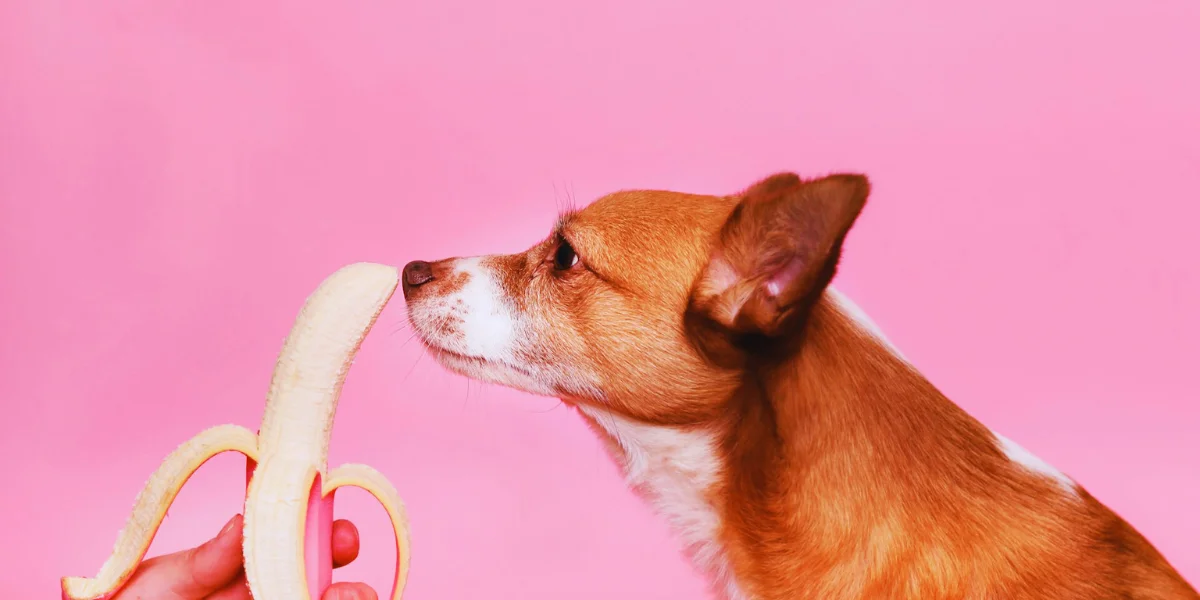
No, dogs should not eat banana pudding. While plain bananas are safe for dogs in small amounts, banana pudding contains added sugar, dairy, and sometimes artificial sweeteners like xylitol that can harm your dog. If your dog just got into a bowl of banana pudding, keep reading. This guide walks you through exactly what to watch for, when to call the vet, and how to keep your dog safe.
My dog ate banana pudding. What should I do now?
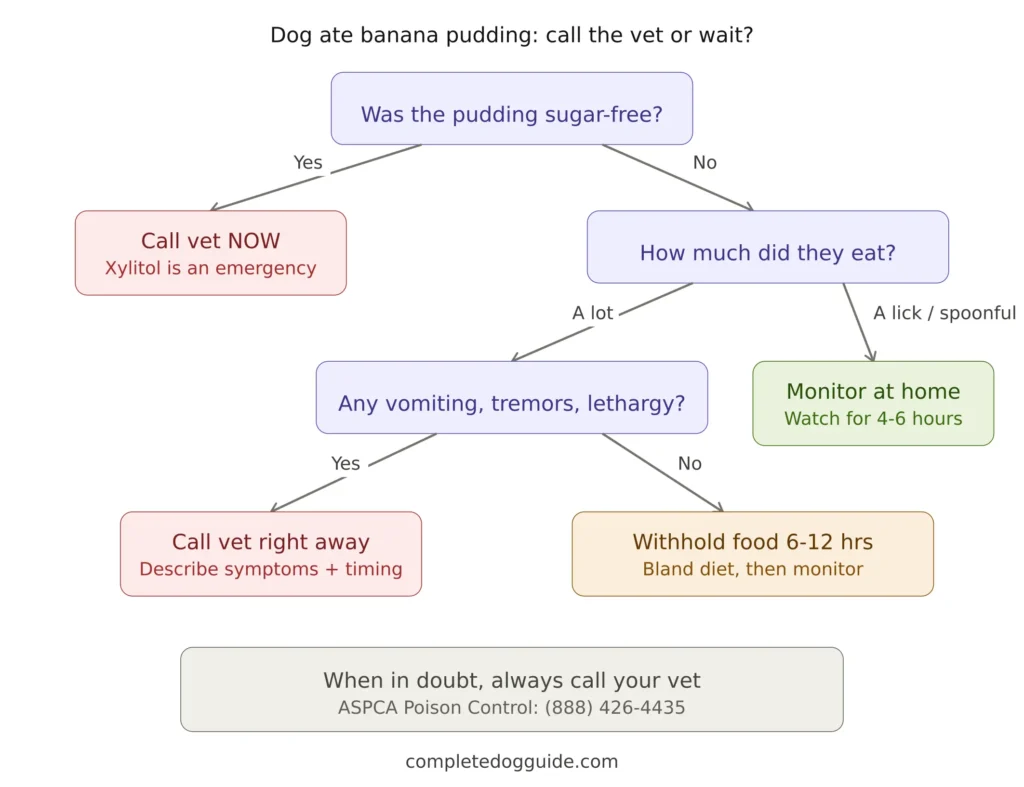
First of all, don’t panic. If your dog licked a small amount of regular banana pudding, it’s unlikely to cause any serious problems. But you need to find out right away if your dog is in any danger.
Here’s a step-by-step guide on what to do:
Step 1: Check the ingredients list on the can or packet immediately
Look specifically for xylitol, birch sugar, or any type of sugar alcohol on the ingredients list. If the pudding is sugar-free, it’s an emergency. Go to Step 5 immediately.
Step 2: Estimate the amount eaten
A tablespoon for a 50-pound dog is a big difference from a bowl full for a 10-pound puppy. The more your dog eats relative to his body weight, the greater the risk.
Step 3: Note the time
Write down the exact time your dog ate the pudding. Your veterinarian will definitely ask this question, and this information is very important for treatment decisions.
Step 4: Monitor your dog for the next 2 to 4 hours
Watch for signs of vomiting, diarrhea, restlessness, or lethargy. If the pudding did not contain xylitol and your dog seems fine after 4 to 6 hours, the risk is significantly reduced.
Step 5: Contact a doctor or poison control center immediately
Contact a doctor or poison control center immediately if:
– The pudding was sugar-free
– The dog ate a large amount
– Any other symptoms are present
ASPCA Animal Poison Control: (888) 426-4435
Pet Poison Control: (855) 764-7661
Have these details ready when you call: your dog’s weight, what brand or type of pudding was eaten, how much was eaten, and when the incident occurred.
A timeline of symptoms after eating banana pudding
Knowing what to expect when will help you decide if your dog needs to be taken to the vet or if home monitoring is sufficient.
Within 30 minutes
Vomiting, drooling, licking lips, or general restlessness. These are early signs and usually indicate an upset stomach caused by sugar and milk.
Within 1 to 2 hours
Diarrhea, gas, bloating, or loose stools. This is the most common reaction in dogs that eat regular (non-sugar-free) banana pudding. Most dogs recover on their own within 12 to 24 hours.
Within 30 minutes to 12 hours (sugar-free pudding only)
Weakness, tremors, loss of balance, or collapse. These are signs of dangerously low blood sugar (hypoglycemia) due to xylitol, which is a veterinary emergency. According to the Merck Veterinary Manual, xylitol can cause dangerously low blood sugar in dogs within 30 minutes of ingestion, although absorption can sometimes be delayed by 12 to 18 hours, depending on the product.
After 24 hours (sugar-free pudding only)
Jaundice (yellowing of the gums or the whites of the eyes), black stools, or persistent vomiting. These can be signs of liver damage. According to the Merck Veterinary Manual, xylitol can cause acute liver failure in dogs when the dose exceeds 500 mg per kilogram of body weight.
If your dog has not shown any symptoms after 24 hours and the pudding was regular (not sugar-free), then there is a good chance that your dog is fine.
Why Banana Is Safe, but Banana Pudding Is Not
According to the American Kennel Club, bananas are rich in potassium, vitamin B6, vitamin C, and fiber, which are all beneficial for dogs’ health.
But the problem arises when the same banana is given in the form of pudding or a sweet dessert.
- High amounts of sugar (which can lead to obesity and diabetes problems)
- Milk or heavy cream (many dogs are lactose intolerant)
- Vanilla wafers or cookies (refined flour, fat, more sugar)
- Butter or margarine (high in fat)
- Artificial flavoring and thickeners (cornstarch, modified food starch)
- Xylitol (which can be extremely dangerous and toxic to dogs)
Dogs have a different digestive system than humans. So what might seem like a normal dessert to us can be harmful to dogs. These ingredients can put pressure on their pancreas, raise blood sugar, and cause stomach or intestinal problems.
That’s why it’s best to give dogs just plain bananas, not sweetened dishes made with them.
Store-Bought vs. Homemade vs. Sugar-Free: Which Is Most Dangerous?
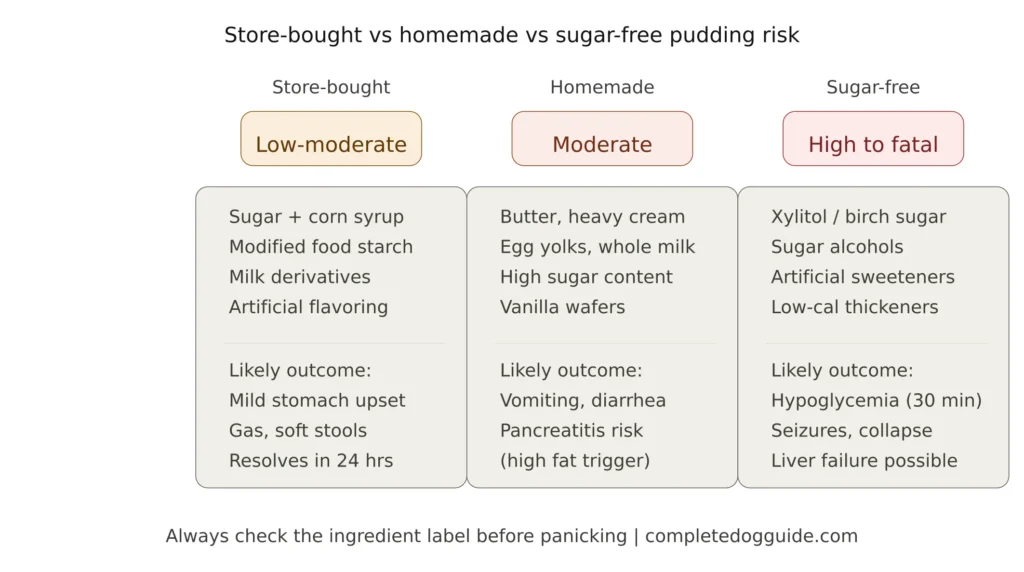
Not every banana pudding poses the same risk. Let’s compare them:
Regular store-bought puddings (like Jell-O or store-brand Cups): These usually contain sugar, modified starch, milk ingredients, and artificial flavoring. They’re not toxic, but the sugar and milk ingredients they contain can cause digestive upset, especially in small dogs. Risk level: Low to moderate.
Homemade banana pudding: These are usually made with eggs, sugar, milk or cream, vanilla wafers, and butter. The biggest risk here is the high fat content, as high-fat foods can trigger pancreatitis in dogs, a painful and sometimes life-threatening condition. Risk level: Moderate, especially for dogs with a history of pancreatitis.
Sugar-free or “diet” pudding: This is by far the most dangerous category. Many sugar-free puddings use xylitol (also known as birch sugar) as a sweetener. According to research published in the Journal of the American Veterinary Medical Association, dogs who consume more than 0.1 grams of xylitol per kilogram of body weight can experience dangerously low blood sugar. More than 0.5 grams per kilogram poses a real risk of severe liver damage. Even a very small amount can reach this limit for a 20-pound dog. Risk level: Life-threatening
How to read an ingredient label
Before you panic, be sure to check the packaging. Look for these things:
Look for these words in the ingredients list: xylitol, birch sugar, birch bark extract, sugar alcohol. If you see any of these, consider it an emergency and call your vet immediately.
Also check: sorbitol, erythritol, and maltitol. These sugar alcohols are not as dangerous to dogs as xylitol, but they can still cause digestive problems like diarrhea and gas.
If the ingredients list regular sugar (sucrose), corn syrup, or high fructose corn syrup, the pudding is not immediately toxic. It may not be healthy for your dog, but the situation won’t be as immediate. Sonnet 4.6
Ingredient Risk Breakdown
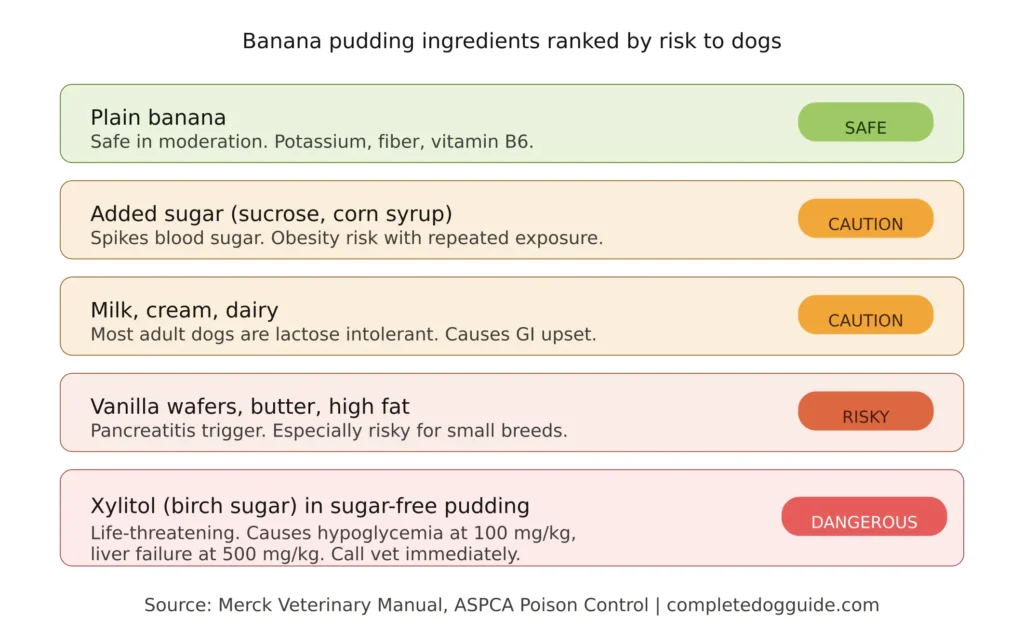
Below is a quick safety comparison:
| Ingredient | Safety for Dogs | Why It Matters |
| Plain banana | Safe in moderation | Natural sugars, potassium, fiber |
| Added sugar | Not recommended | Contributes to obesity in dogs and blood sugar spikes |
| Dairy (milk/cream) | Often problematic | Many dogs have lactose intolerance |
| Vanilla wafers | Unsafe | Processed carbs, fats, sugar |
| Xylitol (artificial sweetener) | Highly toxic | Can cause hypoglycemia and liver failure |
Even if the pudding doesn’t contain xylitol, the high sugar and fat content can still trigger digestive distress.
The Real Risks: What Can Happen?
- Digestive Upset
The most common outcome is:
- Vomiting
- Diarrhea
- Gas
- Bloating
Dogs often struggle with lactose intolerance after puppyhood. Dairy-heavy desserts can quickly irritate the gastrointestinal tract.
- Blood Sugar Spikes
Banana pudding contains concentrated sugar. It can cause a rapid insulin response, especially in small breeds. Repeated exposure increases the risk of weight gain and metabolic stress.
- Pancreatitis in Dogs
High-fat desserts can trigger pancreatitis, a painful inflammation of the pancreas.
Symptoms include:
- Lethargy
- Severe abdominal pain
- Repeated vomiting
- Loss of appetite
This condition requires veterinary medicine intervention.
- Xylitol Toxicity
Sugar-free pudding is especially dangerous. Xylitol toxicity can cause:
- Sudden hypoglycemia (low blood sugar)
- Tremors or seizures
- Liver failure
If you suspect xylitol ingestion, contact a veterinarian or animal poison control immediately.
Banana vs Banana Pudding: What’s the Difference?
Plain banana contains:
- Potassium
- Vitamin B6
- Vitamin C
- Fiber
Banana pudding contains:
- Added sugar
- Refined carbohydrates
- Dairy fat
- Artificial additives
Bananas can be an occasional treat. Banana pudding is a dessert designed for human digestion.
How Much Plain Banana Is Actually Safe for Dogs?
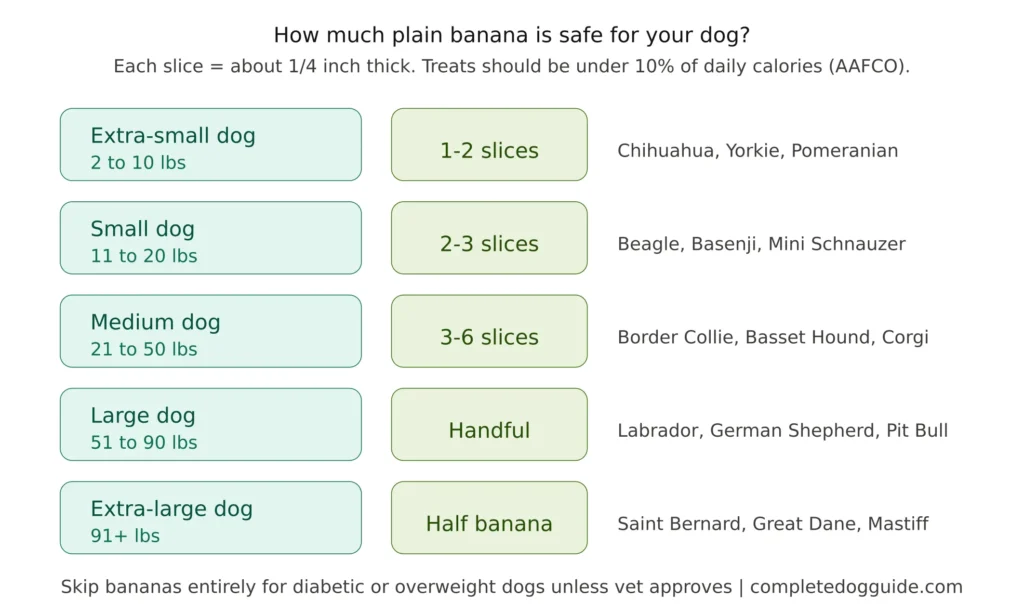
Since banana is the only safe ingredient in banana pudding, here’s how much banana you can give your dog as a treat:
- Very small dogs (2 to 10 pounds): 1 to 2 thin slices
- Small dogs (11 to 20 pounds): 2 to 3 thin slices
- Medium dogs (21 to 50 pounds): 3 to 6 thin slices
- Large dogs (51 to 90 pounds): A small handful of slices
- Very large dogs (over 90 pounds): Up to half a banana
Each slice should be about a quarter of an inch thick. According to the Association of American Feed Control Officials (AAFCO), no additional foods, including fruit, should make up more than 10 percent of your dog’s daily calories. The remaining 90 percent of nutrition should come from a complete and balanced dog food.
If your dog has diabetes, obesity, or any metabolic disease, be sure to consult your veterinarian before adding bananas or any fruit to their diet.
Regional Variations to Be Aware Of
In the United States, banana pudding often includes vanilla wafers.
In the UK, similar desserts may be called custard.
In Australia, instant pudding mixes are common, these may contain additives and artificial sweeteners.
Regardless of region, the risk comes from sugar, dairy, and artificial ingredients.
Who Should Be Most Careful?
- Puppies
- Small breeds
- Senior dogs
- Dogs with a pancreatitis history
- Diabetic dogs
- Overweight dogs
These dogs are more sensitive to glycemic changes and fat intake.
Can One Bite Hurt My Dog?
A single small bite of regular (non-sugar-free) banana pudding will likely cause mild stomach upset at most.
However, sugar-free pudding is a different story. Even small amounts of xylitol can be life-threatening. When in doubt, call your vet.
Are Bananas Too Sugary for Dogs?
Bananas contain natural sugars, but in whole-fruit form, they’re generally safe in small amounts.
The issue is concentration. Pudding dramatically increases sugar density, which stresses the canine digestive system.
Better Dessert Alternatives for Dogs
If you want to treat your dog safely:
- Fresh fruit in small portions
- Commercial dog treats formulated under AAFCO standards
- Frozen fruit cubes
- Oat-based homemade dog biscuits
Stick to simple, whole ingredients.
FAQ’s
Is Banana Pudding Poisonous to Dogs?
Banana pudding isn’t actually poisonous, but it can make your dog sick due to high sugar and dangerous levels of dairy and fat. Banana pudding made without sugar and containing xylitol is poisonous.
Can puppies have banana pudding?
No, puppies should not have banana pudding. They are more sensitive to banana pudding ingredients than adult dogs. Also, because they have lower body weights the same amount of sugar/fat/xylitol will affect them more severely. Just feed your puppy puppy-safe treats.
Will I need to make my dog vomit up banana pudding?
Unless specifically instructed to do so by your vet, do NOT make your dog vomit up the pudding at home. Forcefully vomiting your dog can cause aspiration (where the food travels into the lungs) and lead to more serious problems. Call your vet first for instructions.
How long until symptoms of banana pudding occur?
If your dog only ingested banana pudding containing sugar (non-sugar-free), you can likely expect symptoms like vomiting or diarrhea within 30 minutes to 2 hours of ingestion. If your dog consumed sugar-free banana pudding containing xylitol, life-threatening symptoms could occur within 30 minutes or could take up to 12-18 hours to occur.
My dog ate banana pudding several days ago and seemed fine. Can they eat some more now?
Just because your dog may have eaten banana pudding before and didn’t get sick doesn’t mean it’s OK to feed your dog again. Feeding your dog high sugar/high fat foods even when they don’t show symptoms can still lead to obesity, tooth decay, pancreatitis, and diabetes. Please don’t risk it when there are plenty of dog-safe alternatives.
Can Dogs Eat Banana Pudding with Vanilla Wafers?
No. Vanilla wafers contain processed sugar and refined carbohydrates, which are not suitable for dogs.
What Fruits are Unsafe for Dogs?
Grapes and raisins are toxic. Always verify fruit safety before feeding.
What to Remember
Bananas are safe for dogs in moderation. Banana pudding is not. The added sugar, dairy, and potential artificial sweeteners make it unsuitable for canine digestion. If your dog accidentally eats some, check the ingredients immediately and monitor for symptoms.
When it comes to your dog’s health, simple, whole foods are always safer than processed desserts.
Veterinary Disclaimer: This article is for educational purposes only and does not replace professional veterinary advice. If your dog has eaten something potentially harmful, contact your veterinarian or the ASPCA Animal Poison Control Center at (888) 426-4435 immediately.
About the Author
Faizan is the founder and writer behind Complete Dog Guide, a blog dedicated to helping dog owners with practical, well-researched information on dog food, care, grooming, and training. With 5 years of experience in content writing and blogging, he spends hours digging through veterinary publications, official guidelines from organizations like the ASPCA, AKC, AAFCO, and the Merck Veterinary Manual to make sure every article is backed by reliable sources.
Complete Dog Guide does not provide veterinary advice. Every health-related article on this site is researched using published veterinary data and clearly cites its sources. If your dog has eaten something harmful, always contact your veterinarian first.
Sources cited in this article:
- Merck Veterinary Manual: Xylitol Toxicosis in Dogs
- Journal of the American Veterinary Medical Association (JAVMA): Retrospective evaluation of xylitol ingestion in dogs
- VCA Animal Hospitals: Food Intolerance in Dogs
- ASPCA Animal Poison Control
- Association of American Feed Control Officials (AAFCO)