Now Reading: How to Take Care of a New Puppy: A Real Guide for First-Time Owner
- 01
How to Take Care of a New Puppy: A Real Guide for First-Time Owner


Your puppy’s first night home will probably go something like this: crying at 2 AM, an accident on the kitchen floor by 3 AM, and you sitting on the couch at 4 AM googling “did I make a mistake getting a puppy.”
You didn’t. But nobody warns you how exhausting the first few weeks actually are.
The truth is, most new puppy owners feel completely overwhelmed during the first month. You will lose sleep. Your house will smell like pee at least once. Your shoes might not survive. And somewhere around week two, you will question everything.
That is all normal. Every experienced dog owner has gone through the same thing.
This guide covers the first 90 days with your new puppy, from the moment they walk through your door to when life starts feeling manageable again. No filler. No generic advice you have already read ten times. Just the things that actually make a difference based on veterinary guidelines from the ASPCA and AKC.
Get This Ready Before Your Puppy Even Walks In
The most common puppy issues experienced in Week One are largely due to an unprepared home environment. A minimal amount of preparation can make a huge difference.
Prepare All Rooms Your Puppy Will Have Access To As Puppy-Proofed Areas
- Take out toxic plants (e.g., Pothos, Aloe Vera, Peace Lily) as they are poisonous to dogs.
- Store your electrical cords by either tucking them under furniture or covering them with cord protectors.
- Secure low cabinets with childproof locks where you store cleaning products.
- Clean up all items off the floor that could be swallowed by your puppy and cause a blockage.
Create Your Puppies’ “Calm Corner”
I believe one thing that most guides do not tell you: if you can, try to get a piece of clothing from the puppy’s mother or litter and place it in the crate with the puppy.
What To Do The First Night After Bringing A New Puppy Home?
This is the question that all new owners want to know about, but most articles leave out.
Your puppy just left his/her Mother, Siblings, and all of the familiar scents that he/she has ever experienced. So the first night will be difficult for him/her. Expect crying. Expect little sleep.
What Really Works
First, place the crate in your bedroom for several nights. Simply being present helps reduce the pup’s anxiety.
Use a warm (not scalding) water bottle wrapped in a towel inside the crate to replicate body heat from littermates.
After bedtime, keep the room very quiet and dark to signal to the pup it is time for sleep, not playtime.
Do not go into the pup each time you hear them whine. Wait until there is a brief pause before checking on them. The pups will learn that crying gets you attention.
Be prepared to take the pup outside to pee for at least one trip during the middle of the night for the first couple of weeks. At three months old, a puppy can not control urination for eight hours.

What Is the 3-3-3 Rule for Puppies?
The 3-3-3 rule for new puppies is a helpful guide for pet owners to understand the emotional change of a dog to a new home.
It shows how a dog settles into a new home in three stages over specific time periods:
| Stage | What’s Happening | What You Should Do |
|---|---|---|
| First 3 Days | Overwhelmed, quiet, or anxious | Keep things calm. Limit visitors. Let them explore at their own pace. |
| First 3 Weeks | Starting to settle, testing boundaries | Establish routines. Start basic training. Build consistency. |
| First 3 Months | Comfortable, personality emerging | Deepen socialization. Continue training. Schedule vaccinations. |
Important: Please don’t expect your puppy to feel fully settled during the first week in a new home. According to a study shared by Rescue Dogs 101, a dog’s complete adjustment period can take around three months. Because of this, it’s important to stay patient and supportive throughout the process.
What Does the 7-7-7 Rule Mean for Puppies?
The 7-7-7 rule is a socialisation checklist that many top breeders and trainers use. Its purpose is to introduce your puppy, especially during the first few weeks in your care, to seven different types of:
- 7 different surfaces (grass, tile, gravel, carpet, wood, sand, concrete)
- 7 different objects (umbrellas, bags, hats, bicycles, strollers, boxes, traffic cones)
- 7 different people (children, elderly, men, women, people with beards, people in uniforms, etc.)
Why does the 7-7-7 rule matter so much? According to PetMD ,the socialisation window closes at 12-14 weeks of age.
After this period, new experiences can be harder for a puppy to process without fear.
Any experience that a puppy has not been exposed to positively in this time frame may result in lifelong fear.
Pro tip:Reward your puppy with treats during all 7-7-7 exposures. The purpose of the 7-7-7 rule is to create an environment where all of these new experiences are perceived as positive and safe for your puppy.

How Long Can a 3-Month-Old Puppy Stay Up At Night Without Peeing?
Short answer: Probably not. Expecting a puppy to sleep through the entire night can delay potty training.
A simple rule can help estimate how long a puppy can hold its bladder. In general, a puppy can hold its bladder for about one hour per month of age, plus one additional hour. For example, a three‑month‑old puppy can usually hold it for up to four hours during the day when the puppy is active.
At night, when the body slows down, some puppies may be able to hold it slightly longer. However, expecting a three‑month‑old puppy to stay dry for 7 to 8 hours is unrealistic for most dogs.
Here Is What Works
- Schedule your puppy’s final potty break before bedtime, ideally as late as possible.
- Set a single midnight alarm to take them out for the first 4-6 weeks.
- When taking your puppy out in the middle of the night, keep the outing quiet and boring – no playing, no talking, and then back to the crate.
- As your puppy grows, gradually extend the time between midnight outings. By four to five months of age, most puppies will sleep through the entire night.
The 6 Things That Actually Matter in the First 90 Days
1. Nutrition: Feed for Growth, Not Just Convenience
Choose a high‑quality puppy food that matches your dog’s size. This is especially important for large‑breed puppies, as they need the right nutrition to support healthy bone and joint development.
Feed your puppy three times a day until it is about six months old. After that, you can switch to feeding twice a day.
If you plan to change the food your breeder was using, make the transition slowly. Begin with a small mix of the new food in your dog’s usual meal, and over 7 to 10 days, slowly replace the old food with the new one. Switching food too quickly can upset your puppy’s stomach.
2. Potty Training: Consistency Over Perfection
Take your puppy outside every 2-4 hours and immediately after eating and waking. When your puppy goes in the right area, praise and reward him/her immediately.
Never punish your puppy for having an accident in the house. Punishment only makes puppies feel scared or confused, and it does not help them learn. Just clean up the accident calmly and take your puppy outside to reinforce the right behaviour more often, so they get more chances to go in the right place.
3. Veterinary Care: Don’t Miss the First Appointment
Schedule a vet visit within the first week of bringing your puppy home. The ASPCA recommends this as standard for every new puppy. This first checkup helps your vet record your puppy’s general health, start vaccines, and gives you time to ask all your questions.
- Core vaccines usually start around 6–8 weeks of age and need booster shots every 3–4 weeks until about 16 weeks.
- Ask your vet when to start deworming and flea/tick prevention, as the schedule can depend on where you live.
4. Crate Training: A Den, Not a Punishment
A crate should feel like a cosy den or safe place for your puppy, not a place for punishment. Use it as a spot where your puppy can relax and feel secure.
To help your puppy like the crate, start by feeding meals next to it, then slowly move the food bowl inside so your puppy connects the crate with something good. Begin with very short crate times, such as 5 minutes while you are nearby, then gradually increase to 15 minutes, 30 minutes, and longer over several days, not all at once in a single day.
5. Basic Training and Socialisation
Start training from day one. Training is not just about tricks; It helps your puppy grow more confident and adjust comfortably to life in your home.The AKC recommends using positive reinforcement, by showing appreciation for the right behaviour with treats, toys, and praise.
Weeks 1–2: Teach your puppy its name, how to sit, and get it used to the gentle handling of paws and ears.
Weeks 3–4: Teach your puppy to come to you indoors, to drop things when asked, and start introducing the leash.
Months 2–3: Teach your puppy to leave things alone when asked, to greet visitors calmly, and slowly increase the time and number of outdoor walks in safe places.
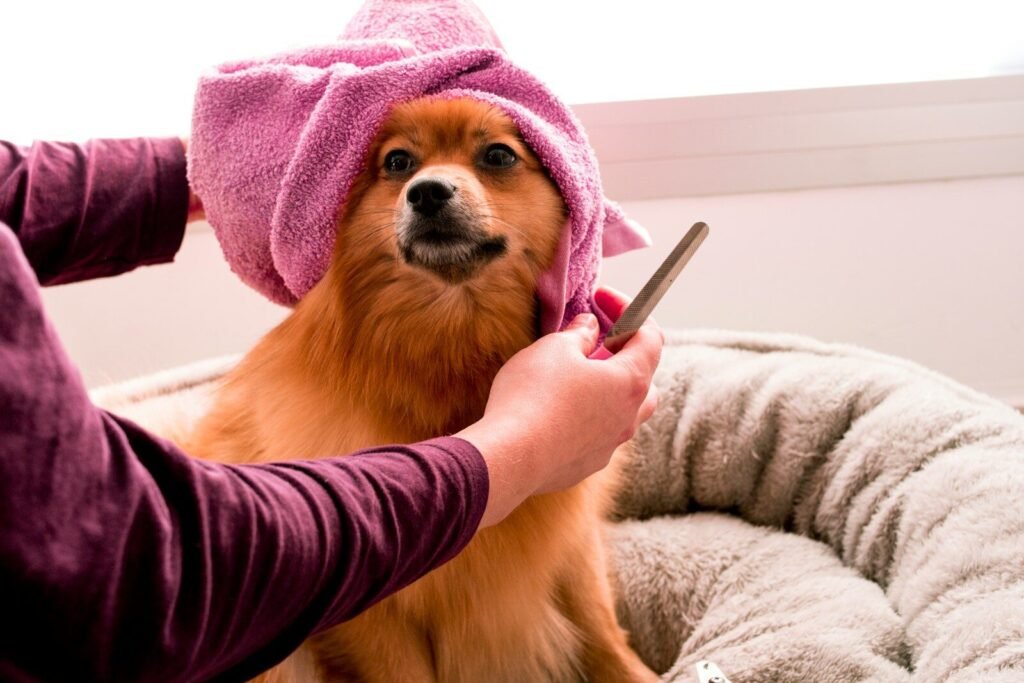
6. Grooming, Introduce Early, Make It Positive
You do not need full grooming sessions right away. The main goal at first is to help your puppy get used to being touched. According to AVSAB , there is no stronger indicator of calmness in adult dogs than the amount of positive interaction they had with humans when they were young. Gently touch their paws, ears, and mouth every day from the first week, and give a small treat each time so they learn that handling is a good thing. Over time, this helps them stay calm for grooming and vet visits.
- First vet-approved bath: around 8 weeks, using puppy-safe shampoo only
- Start brushing early, regardless of coat type, to build trust and catch skin issues early.
- Book the first professional groom between 12-16 weeks after core vaccinations.
What Are the Hardest Months of Raising a Puppy?
Months two to five are usually the toughest for most puppy owners. During this time, you are both learning a lot, and it can feel overwhelming.
- Months 2-3: Everything is new. Your sleep is broken, accidents happen often, and you are trying to figure things out as you go.
- Months 4-5: Teething starts. Your puppy wants to chew everything, and it can feel like training is not working at all.
- Months 6-9: This is the “teenage” stage. Hormones kick in and a puppy that used to listen well may suddenly start ignoring you sometimes.
The good news: The good news is that it really does get easier. Many owners feel more settled by around month 6, and by about 12 months, you start to see the grown-up dog you have been working toward. The people who struggle the most are usually the ones who expected it to be easy or stopped being consistent when it was hard. Keep going and stay consistent.
First-Time Puppy Owner Checklist: Everything You Need on Day One
Before your puppy comes home, make sure you have:
- A crate large enough to comfortably accommodate your puppy when it reaches full size.
- Food and water bowls (stainless steel is best).
- High‑quality puppy food, ideally the same brand your breeder or shelter is using at first.
- A collar for your pet that includes a tag showing its identification details and current microchip details.
- A 4–6 foot leash (avoid retractable leashes for now).
- A soft blanket and one or two safe chew toys.
- Puppy‑safe shampoo and a soft brush.
- An enzymatic cleaner to fully remove the smell of accidents.
- A vet appointment is scheduled within the first week.
- And most importantly, patience, you will need more than you think, and that is completely normal.
Honest Answers to the Questions You Are Too Tired to Google
Your puppy is just as overwhelmed as you are. There are three things to help get him settled down: safety, routine, and calm. Puppy-proof your home. Establish a regular schedule for meals and trips outside. Do not let every single person come to visit your puppy within the first week. Your first week will be chaotic, but simply establish routines and gradually develop your training strategies.
The 3-3-3 rule is one of the best tools available to guide you. The first 3 days after bringing your puppy home, he or she will be totally overwhelmed. During the next 3 weeks (weeks two through four), your puppy will be adjusting to your established routine and attempting to test limits. At 3 months, the true nature of your puppy’s personality will emerge, and they will begin to feel comfortable in their environment. Understanding what stage your puppy is at is much more important than which training method you choose to use.
The 7-7-7 rule focuses on socialization. By the end of the critical window (approximately 12 to 14 weeks), before your puppy has experienced 7 different surfaces, 7 different objects, and 7 different types of people, they will either learn to associate these experiences as enjoyable or fear them. Reward all new experiences with treats so they associate all of them with something good.
By approximately three months of age, puppies typically can control their bladders for roughly four hours per day. As soon as you expect your puppy to last through an entire eight-hour night without waking is when you’re being unreasonable. For at least several weeks, expect at least one middle-of-the-night bathroom trip. Most puppies will stop getting up to pee at approximately four to five months of age.
Months 2-5 are usually the toughest months. Broken sleep; accidents constantly happen; teething that destroys everything; and training isn’t seeming like it’s going anywhere. Months six-9 are usually marked by the teenage phase, where your well-trained puppy suddenly pretends not to hear you. Things should start looking up somewhere around month six. And then, by twelve months of age, the dog that you’ve been working towards finally arrives.
Move the crate into your bedroom for the first night so your puppy can sense you near. Keep everything quiet and dark inside. A warm water bottle wrapped in a towel inside the crate will help replicate the warming of littermates. Take one quiet bathroom trip around midnight, make it unexciting and then get right back into bed
What No One Will Tell You About the First Three Months
Being responsible for your new puppy is a great experience, but once you’re on call (for example, at 3 AM) to clean up messes and provide treats while using cleaning spray as well, it’s just not so exciting. Here is what each long-time dog owner has said about caring for their first three months with their puppy: The difficult time is only temporary. The bond you are creating right now by all of the late-night trips to take your puppy out to use the restroom and all of the patience required when training is forever. Your puppy doesn’t need an ideal owner. Your puppy needs someone who continues to show up. And since you’re reading this guide, that means you’ve already started being that owner.
Veterinary Disclaimer: This article is for educational purposes only and does not replace professional veterinary advice. If your dog has eaten something potentially harmful, contact your veterinarian or the ASPCA Animal Poison Control Center at (888) 426-4435 immediately.
About the Author
Faizan is the founder and writer behind Complete Dog Guide, a blog dedicated to helping dog owners with practical, well-researched information on dog food, care, grooming, and training. With 5 years of experience in content writing and blogging, he spends hours digging through veterinary publications, official guidelines from organizations like the ASPCA, AKC, AAFCO, and the Merck Veterinary Manual to make sure every article is backed by reliable sources.
Complete Dog Guide does not provide veterinary advice. Every health-related article on this site is researched using published veterinary data and clearly cites its sources. If your dog has eaten something harmful, always contact your veterinarian first.