Now Reading: Why Dogs Circle Before They Lay Down?
- 01
Why Dogs Circle Before They Lay Down?


If your dog spins in small circles before settling into bed, you’re not alone in wondering why. It’s one of the most common sleep rituals in domestic dogs—and in most cases, it’s completely normal.
This behaviour is rooted in instinct, comfort, and survival patterns passed down from their ancestors. However, in certain situations, excessive circling can signal discomfort or health concerns.
Let’s break it down clearly.
Why Dogs Circle Before They Lay Down
Dogs circle before lying down because of inherited survival instincts that help them feel safe and comfortable. The behaviour also allows them to position their bodies properly before settling in to rest.
The Instinct Behind the Spin
Modern dogs descended from the gray wolf, scientifically known as Canis lupus. In the wild, wolves and early canines didn’t have cosy dog beds. They had grass, dirt, snow, and unpredictable terrain.
Before resting, they would:
- Trample vegetation to create a flatter sleeping area
- Check for insects, snakes, or hidden threats
- Position themselves strategically to monitor their surroundings
- Adjust for wind direction and temperature
Even though your dog sleeps indoors, that inherited “denning behaviour” still lives on. Instinct doesn’t disappear just because comfort improves.
Comfort and Body Positioning
Circling isn’t just about safety. It’s also about biomechanics.
Dogs instinctively adjust their bodies before lying down to:
- Align the spine
- Reduce pressure on hips
- Protect their abdomen
- Find a stable resting posture
These positioning instincts are also why some dogs sleep on their feet, choosing a position that feels physically secure and comfortable. Older dogs may circle longer because they need more time to find a comfortable position. Conditions like arthritis or hip dysplasia can increase the need for repositioning before rest. If your senior dog takes longer to settle, it may simply be joint stiffness, not anxiety.
Temperature and Environmental Regulation
Before domestication, dogs had to regulate their body temperature using the environment.
Circling allowed them to:
- Dig shallow depressions in warm weather
- Compact snow for insulation in winter
- Curl tightly to conserve heat
You might notice your dog circles more when bedding changes or during seasonal shifts. Even indoor dogs respond to environmental cues.
Is It Always Normal?
Most of the time, yes.
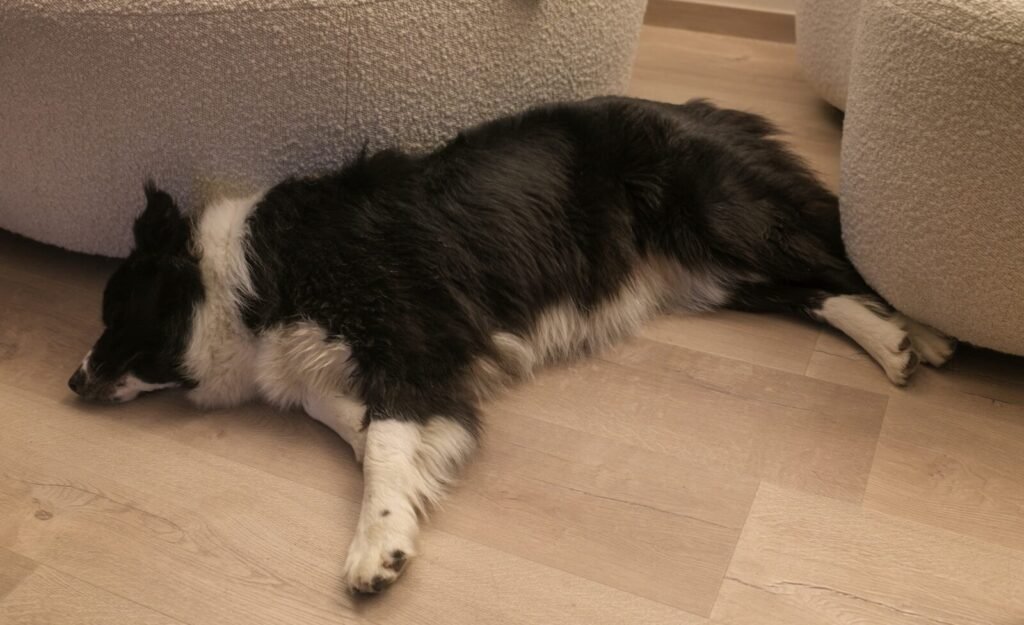
A few turns, usually one to three rotations, followed by calm settling, is typical. Puppies, adult dogs, and seniors all show this instinct.
But there are situations where circling deserves attention.
When Circling Becomes a Concern
Pay closer attention if you notice:
- 10+ repetitive spins
- Whining while circling
- Inability to settle
- Confusion or staring at the walls
- Nighttime pacing
In some cases, excessive circling may relate to anxiety, neurological imbalance, or canine cognitive dysfunction (often compared to dementia in aging dogs).
It can also be linked to joint degeneration, spinal discomfort, or ear infections affecting balance. A sudden behaviour change is always more concerning than a lifelong pattern.
Normal vs. Abnormal Circling
| Normal Behaviour | Concerning Behaviour |
| 1–3 turns | Continuous spinning |
| Calm settling | Restlessness or distress |
| Long-standing habit | Sudden new behaviour |
| No pain signs | Whining or stiffness |
If you’re unsure, observe patterns over several days before assuming the worst.
Breed and Personality Differences
Some breeds display stronger pre-rest scanning behaviours.
Herding breeds like the Border Collie tend to stay alert to their surroundings. Guardian breeds such as the German Shepherd may orient themselves toward doors or entry points.
Highly anxious or sensitive dogs may circle more if their environment feels unpredictable.
Temperament plays a role, not just biology.
Circling vs. Anxiety: How to Tell the Difference
Normal circling:
- Brief
- Calm
- Predictable
- Ends in restful sleep
Anxiety-driven behaviour:
- Paired with pacing
- Excessive licking
- Panting
- Hypervigilance
If your dog circles and seems unable to relax, environmental stress may be involved. New homes, loud noises, or routine changes can trigger repetitive behaviours.
Circling in Senior Dogs
As dogs age, mobility changes.
You may notice:
- Longer time to settle
- Stiffness when standing
- Reluctance to lie down
- Increased nighttime activity
Canine cognitive dysfunction can also affect sleep patterns. Dogs may appear disoriented or restless.
If circling increases dramatically in an older dog, a veterinary check is a smart next step.
What You Should Do
If circling appears normal:
- Provide supportive bedding
- Maintain consistent sleep areas
- Monitor changes over time
If circling seems excessive:
- Check for joint discomfort
- Watch for neurological signs
- Consult a veterinarian
- Avoid forcing your dog to lie down
Observation is more powerful than assumption.
Can You Stop a Dog from Circling?
You shouldn’t try to stop normal circling. It’s instinctive and harmless in most cases.
If the behavior becomes obsessive, address the underlying cause rather than the action itself.
Comfort, stability, and routine solve more problems than correction.
Frequently Asked Questions
Q: Why do Dogs Circle Three Times Before Lying Down?
There’s no fixed number. Most dogs rotate a few times to position their bodies comfortably before resting.
Q: Do all Dogs Circle Before Sleeping?
Most do, though the intensity varies. Some barely turn; others rotate more visibly.
Q: Why Does my Dog Circle and Dig Before Bed?
It mimics ancestral nesting behaviour—flattening the ground and creating a secure resting spot.
Q: Is Circling a Sign of Dementia in Dogs?
Occasional circling is normal. Persistent, confused spinning combined with disorientation may indicate cognitive dysfunction.
Q: Why Does my Older Dog Circle More than Before?
Joint stiffness, arthritis, or age-related changes can increase repositioning time.
Q: Should I be Worried if my Dog Circles Every Night?
Not unless the behaviour increases suddenly, includes distress, or prevents settling.
Q: Can Anxiety Cause Excessive Circling?
Yes. Stress, environmental changes, or separation anxiety can increase repetitive behaviours.
Q: Is Circling Linked to Wolves?
Yes. The behaviour traces back to gray wolves preparing safe resting areas in the wild.
Disclaimer: This article is for informational purposes only and does not substitute professional veterinary advice. Always consult a licensed veterinarian before making any health or dietary decisions for your dog.
Conclusion
Dogs circle before lying down because instinct still guides them. It’s a survival ritual passed down from their wild ancestors, refined by comfort and body mechanics.
In most cases, it’s completely normal. Watch for sudden changes, signs of discomfort, or confusion, especially in older dogs. When in doubt, consult a veterinarian.
Otherwise, let your dog spin. It’s simply centuries of instinct unfolding right in your living room.