Now Reading: How to Stop Dogs from Pulling on Leash: 5 Proven Steps
- 01
How to Stop Dogs from Pulling on Leash: 5 Proven Steps

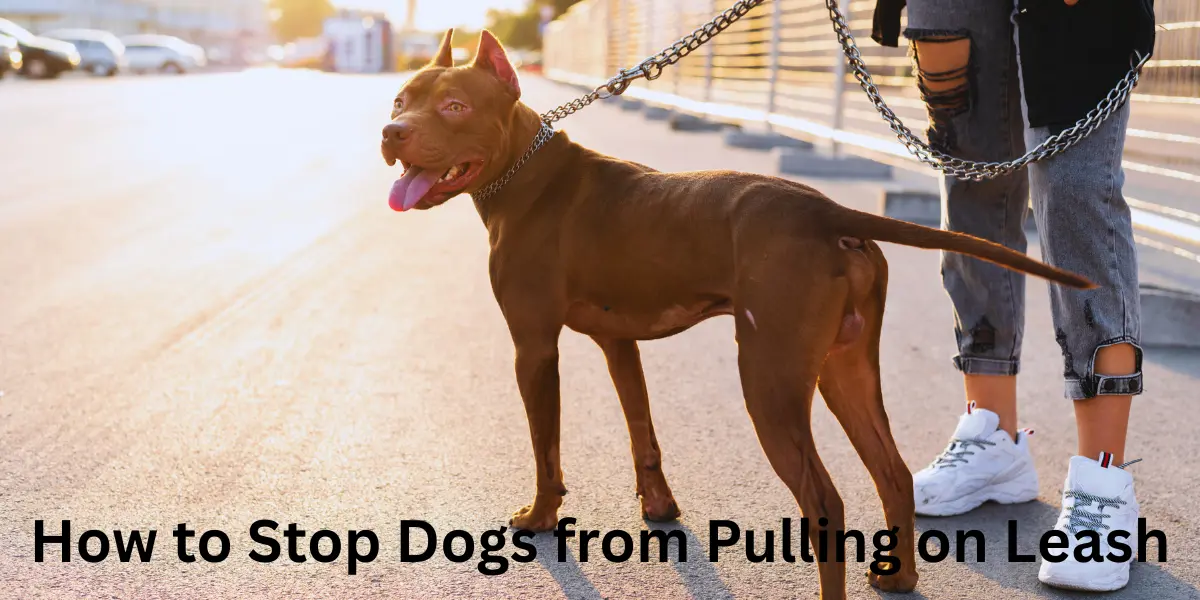
Walking your dog should feel calm, enjoyable, and safe. Yet for many dog owners, leash pulling turns a simple walk into a daily struggle. Sore arms, frustration, embarrassment, and even safety risks are standard when a dog pulls constantly on the leash.
The good news is that leash pulling is not a personality flaw or dominance issue. It’s a learned behaviour, and like any behaviour, it can be changed.
This guide explains how to stop dogs from pulling on leash using humane, practical, and proven methods. It’s designed for both everyday dog owners and professionals who want clear logic, realistic timelines, and training approaches that actually work.
How to Stop Dogs from Pulling on Leash
To stop dogs from pulling on leash, use consistent positive reinforcement training, stop walking when the leash tightens, and reward calm, loose-leash walking. The combination of proper equipment and steady practice teaches dogs that pulling doesn’t work, but calm walking does.
Why Dogs Pull on the Leash
Dogs pull on the leash for simple reasons rooted in canine psychology. Most dogs naturally walk faster than humans, and when pulling helps them reach something interesting, the behavior gets reinforced. Over time, pulling becomes a habit rather than a conscious choice.
Common reasons dogs pull include excitement, curiosity, lack of leash manners, anxiety, or inconsistent training. Puppies pull because they haven’t learned yet. Adult dogs pull because it has worked for them in the past. Rescue dogs may pull due to stress, fear, or because they were never taught calm walking.
Pulling is not dominance. Modern dog behaviour science and professional trainers agree that leash pulling is about reinforcement and arousal, not control or leadership.
What Loose Leash Walking Really Means
Loose leash walking means your dog walks beside you or near you without tension on the leash. The leash stays relaxed, forming a soft curve rather than a tight line. The dog can sniff and explore when allowed, but only when the leash is loose.
This skill is a form of dog obedience training built on communication, timing, and consistency. It does not rely on force or pain. Instead, it teaches the dog that calm walking brings rewards and forward movement, while pulling stops progress. This approach is constructive when building scared dog trust during walks.
Training vs Tools: What Actually Stops Leash Pulling
Many people look for a quick fix, often asking whether a no-pull harness or special collar will solve the problem. Tools can help, but they do not replace training.
Training changes behaviour. Tools manage behaviour.
A front-clip harness, head halter, or standard leash can support training by giving you better control and more precise feedback. However, without consistent dog behaviour training, pulling usually returns once the tool is removed.
The most effective approach combines positive reinforcement training with appropriate equipment.
Step-by-Step: How to Stop Dogs from Pulling on Leash
Step 1: Use the Right Equipment
Choose equipment that supports humane training. A front-clip harness is often the best option for most dogs because it gently redirects the dog toward you when they pull. A standard 4–6-foot leash offers control without encouraging pulling.
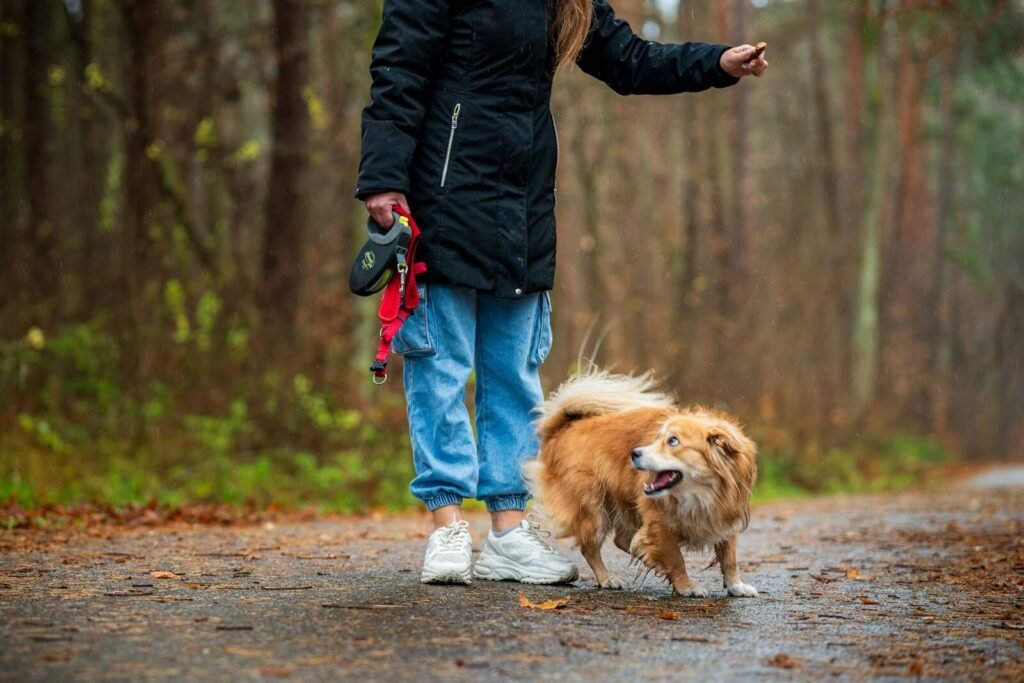
Avoid retractable leashes during training, as they teach dogs that pulling extends the leash. Pain-based tools like choke chains or shock collars increase stress and often worsen leash reactivity.
Step 2: Start Training in Low-Distraction Areas
Begin leash training indoors or in a quiet space. Many owners make the mistake of starting on busy streets where dogs are overstimulated. Training works best when the dog can focus.
Take a few steps forward. If the leash stays loose, reward immediately. If the leash tightens, stop walking. It teaches the dog a clear rule: pulling stops movement, calm walking continues it.
Step 3: Master the “Stop and Reset” Technique
Consistency is critical. Every time your dog pulls, stop moving. Do not yank the leash or scold. Wait until the dog creates slack in the leash, then continue walking.
At first, progress may feel slow. This phase is where many people quit, but it’s also where learning happens. Dogs quickly understand that pulling no longer works.
Step 4: Reward Position and Attention
Reward your dog for being near you, checking in, or walking calmly. Use high-value treats early on, especially for strong pullers or reactive dogs. Over time, you can fade treats and rely more on praise and permission to move forward.
Rewards should happen where you want the dog to walk, not after they pull.
Step 5: Gradually Increase Distractions
Once your dog walks well in quiet areas, slowly introduce more distractions. Move from indoors to your yard, then to quiet streets, and finally to busy environments. This progression prevents regression and builds reliable leash manners.
Puppies, Adult Dogs, and Strong Pullers: What Changes?
Puppies
Puppies are learning from scratch. Short sessions, patience, and consistency matter more than perfection. Focus on habits rather than long walks.
Adult Dogs
Adult dogs may go through a brief phase where pulling gets worse before it improves. This is normal when old habits stop working. Stay consistent and avoid switching methods mid-training.
Large or Strong Dogs
For strong dogs, equipment matters more for safety. A front-clip harness or head halter can prevent injury while training progresses. Strength does not mean the dog can’t learn; it simply means management and training must work together.
How Long Does Leash Training Take?
Leash training timelines depend on age, history, and consistency.
Puppies often show improvement within two to four weeks. Adult dogs typically need four to eight weeks of daily practice. Dogs with long-standing pulling habits or reactivity may take eight to twelve weeks.
Progress is not linear. Expect good days and setbacks. Consistency matters more than speed.
Common Mistakes That Make Pulling Worse
- One of the biggest mistakes is giving in to the temptation to pull “just this once.” Dogs learn from patterns, not exceptions.
- Inconsistent rules confuse them and make it harder to get your dog to listen.
- Other common mistakes include starting training in overstimulating environments, misusing equipment, relying on tools without training, and switching methods too often.
- Yanking the leash or using punishment-based corrections increases fear and reduces trust.
When Pulling Becomes a Safety Issue
Leash pulling can be dangerous, especially in busy environments, with large dogs, or with elderly owners. Sudden lunges can cause falls, shoulder injuries, or traffic accidents.
If pulling is paired with barking, lunging, or fear responses, it may involve leash reactivity. In these cases, behaviour modification techniques such as BAT (Behaviour Adjustment Training) and professional guidance are strongly recommended.
When to Hire a Professional Dog Trainer
If your dog’s pulling does not improve after several weeks of consistent training, or if aggression, fear, or reactivity is involved, a professional dog trainer can help.
Many owners search for dog trainers near me, loose leash walking classes, or obedience schools. Look for trainers who use positive reinforcement methods and explain their process clearly.
Professional help is not a failure. It’s often the fastest and safest path forward.
Costs: Tools vs Training
A quality no-pull harness typically costs a moderate one-time amount. Group leash training classes are often more affordable and provide controlled distractions. Private training sessions cost more but offer personalized guidance.
- Free methods, such as self-training with clear steps, work well when applied consistently. Paid options mainly save time and reduce frustration.
What Not to Do: Safety and Welfare Considerations
Avoid tools that cause pain or fear. Choke chains, prong collars, and shock devices can damage trust and increase anxiety. Humane training aligns with animal welfare standards and yields more reliable, long-term results.
Training should build confidence, not suppress behaviour through fear.
FAQs
Q: Why does my Dog Pull so Hard on the Leash?
Because pulling has worked in the past, it allows your dog to move faster and reach interesting things, reinforcing the behaviour.
Q: Is Leash-Pulling Dominance?
No. Leash pulling is about habit, excitement, or lack of training, not dominance or control.
Q: Do No-Pull Harnesses Hurt Dogs?
When properly fitted, no-pull harnesses are safe and humane. They support training rather than replacing it.
Q: Can Older Dogs Learn Loose Leash Walking?
Yes. Dogs can learn at any age. Older dogs may need more patience, but learning is absolutely possible.
Q: Should I Stop Walking When my Dog Pulls?
Yes. Stopping movement teaches your dog that pulling no longer works, which is key to behaviour change.
Q: What is the Best Leash for Pulling Dogs?
A standard 4–6 foot leash offers the best balance of control and communication during training.
Q: When Should I Hire a Trainer to Help with Leash Pulling?
If pulling is severe, dangerous, or linked to fear or aggression, professional help is strongly recommended.
Conclusion
Stopping leash pulling is not about overpowering your dog or finding a magic tool. It’s about clear communication, consistent training, and humane methods that build trust. When dogs learn that calm walking works and pulling doesn’t, behaviour changes naturally.
With patience, the right approach, and realistic expectations, leash walks can become calm, safe, and genuinely enjoyable for both you and your dog.
Veterinary Disclaimer: This article is for educational purposes only and does not replace professional veterinary advice. If your dog has eaten something potentially harmful, contact your veterinarian or the ASPCA Animal Poison Control Center at (888) 426-4435 immediately.
About the Author
Faizan is the founder and writer behind Complete Dog Guide, a blog dedicated to helping dog owners with practical, well-researched information on dog food, care, grooming, and training. With 5 years of experience in content writing and blogging, he spends hours digging through veterinary publications, official guidelines from organizations like the ASPCA, AKC, AAFCO, and the Merck Veterinary Manual to make sure every article is backed by reliable sources.
Complete Dog Guide does not provide veterinary advice. Every health-related article on this site is researched using published veterinary data and clearly cites its sources. If your dog has eaten something harmful, always contact your veterinarian first.