
Now Reading: Can’t Afford the Vet? A Budget Friendly approach
- 01
Can’t Afford the Vet? A Budget Friendly approach


Last updated: July 2026 | Cost figures cross-referenced with the AVMA, ASPCA, and the American Heartworm Society.
It usually happens in a fluorescent exam room around 9 p.m. The tech slides a printout across the counter. Your dog needs surgery, and the number at the bottom says $3,200. Your stomach drops because you already know what’s in your account, and it isn’t that.
If you have ever stood in that room doing math you know it won’t work. This guide is for you. Not the version that tells you to “budget better” or “just get pet insurance.” The version with actual moves you can make tonight.
Because here is the thing nobody says out loud: loving your dog and being able to write a four-figure check are two completely different things. One has nothing to do with the other.

First, This Is Not a You Problem
Believe this before we go further, because shame keeps people quiet when they should be asking for help.
In the 2025 PetSmart Charities and Gallup study, 52 percent of US pet owners said they had skipped or declined care their pet needed. Of those, 71 percent pointed to cost. A separate 2025 MetLife report found that two in five owners now fear their current pet may be their last, purely because of what care costs.
You are not the rare failure in a world of people who can afford this. You are the majority. Now let’s get to work.
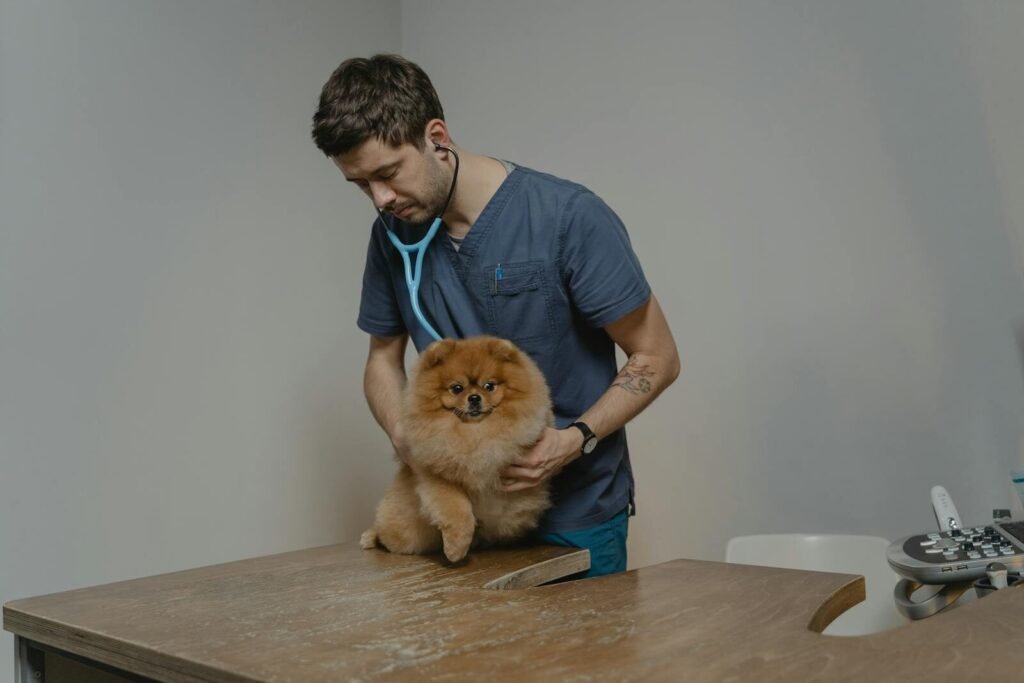
The Five-Minute Conversation That Can Cut the Bill in Half
Here is a number that may be frustrating. ”In the same Gallup study, 73 percent of owners who declined care due to cost said their vet never offered a lower-cost option”.
Not because vets are cruel. Because they default to the gold-standard plan unless you tell them money is a factor. So tell them. Plainly: “I love this dog and I want to treat him, but I have a hard budget limit. Walk me through my real options.”
Then ask for these specifically:
- An itemized estimate, not a lump sum. You cannot cut what you cannot see.
- The gap between the ideal plan and the safe-enough plan. Sometimes the $400 version gets your dog well, and the $900 version just gets him well a little faster.
- A written prescription you can fill elsewhere. More on why in a second.
- Whether treatment can be staged. Handle the urgent part now, schedule the rest.
I have seen this one conversation turn a $900 estimate into a $450 one, because the owner finally gave the vet permission to find the budget path. Most vets want your dog treated; they just need you to open the door.
The Prescription Trick Almost Nobody Uses
This one alone can save you hundreds a year, and most owners have no idea it exists.
A surprising number of dog medications are the exact same drugs people take. Fluoxetine for anxiety. Gabapentin for pain. Plenty of common antibiotics. When that’s the case, you do not have to buy them at your clinic’s in-house pharmacy, where the markup is steepest.
Instead, ask your vet for a paper prescription. Then fill it at a regular human pharmacy using a free GoodRx for Pets coupon, exactly like you would for your own medication at CVS, Walgreens, or Walmart.
Two details that matter:
Costco’s pharmacy is often the cheapest in the country, and you don’t need a membership to use it. That’s Costco’s own policy. Just tell the greeter at the door you’re picking up a prescription, and walk in.
For ongoing meds like heartworm and flea prevention, online pharmacies such as Chewy and Walmart Pet Rx usually run 10 to 50 percent cheaper than the clinic. Consumer Reports profiled one owner who cut her dog’s medication costs roughly in half this way over five years.
Just call ahead to confirm the pharmacy can fill a pet prescription, and you’re set.
Where the Same Care Costs a Fraction
A private clinic is the most expensive door you can walk through. It is not the only one.
If there’s a college with an accredited veterinary program in your state, it almost certainly runs a teaching hospital where students treat your dog under licensed supervision. The care is real and high quality, often at a serious discount. Search your state plus “veterinary teaching hospital.”
For everyday needs, low-cost and sliding-scale clinics run by humane societies, weekend vaccine clinics at pet stores, and shelter wellness programs handle vaccines, microchipping, and spay/neuter for a fraction of clinic prices. The ASPCA keeps a searchable national list of low-cost programs by region, which is the fastest way to find what’s near you.
These fill up and sometimes have income limits, so call early in the week, not mid-crisis.
When the Bill Is Bigger Than Anything You Can Cover
Sometimes the discount isn’t enough and the number is just enormous. Real money exists for exactly this, and most people never apply because they don’t know it’s there.
A few that genuinely help US owners:
- Red-Rover Relief Urgent Care grants: The average award is around $250, meant to close the small gap that’s the only thing standing between your dog and treatment. You’ll need a diagnosis and treatment plan from your vet first, a household income under $60,000, and you apply through their site. They usually respond within one to two business days, and you can apply the same day treatment begins, so don’t delay care waiting on them.
- Frankie’s Friends: Grants up to $2,000 for emergency and specialty care.
- Cancer-specific funds: If the diagnosis is cancer, Live Like Roo, the Magic Bullet Fund, and the Joshua Louis Animal Cancer Foundation fund treatment specifically.
- Breed clubs: If your dog is purebred, that breed’s national club often keeps a small medical fund.
Two honest truths. These funds are small against the demand, with eligibility rules and limited dollars, so apply to several at once instead of betting everything on one. And RedRover maintains a free directory of dozens more assistance organizations, worth ten minutes of your night.
Have your proof of hardship ready to speed things up: pay stubs, a SNAP or Medicaid card, or a benefits letter.
How to Finance It Without Getting Burned
If you have to borrow, how you borrow matters enormously.
Care-Credit is the card most clinics push, and its “no interest if paid in full” promo plans, running 6 to 24 months, can work. But understand the trap clearly. This is deferred interest. If you don’t clear the entire balance before the promo period ends, you get charged interest on the full original amount, dating all the way back to purchase day, at around 29.99 percent. The Consumer Financial Protection Bureau has flagged products like this for blindsiding people. Use it only with a hard payoff plan and a calendar reminder you won’t ignore.
Better options often exist. Scratch-pay offers payment plans, some at a true zero percent with no deferred-interest landmine. Many clinics will quietly set up an in-house plan if you’ve been a client and simply ask. And on a large bill you can stack: a grant to shrink the total, a true 0 percent plan for one chunk, and the lowest-rate option you qualify for on the rest. That blended cost beats dumping it all on a deferred-interest card and missing the deadline.
The Bills You Can Erase Before They Ever Arrive
This won’t help tonight’s emergency, but it’s the most powerful money lever you have for every month after.
Heart-worm is the clearest example I know. Prevention runs about $70 to $200 a year, per the American Heart-worm Society. Treating an actual infection runs $600 to $3,000, and severe cases needing surgery can reach $6,000. Put plainly, ten years of prevention costs about what one round of treatment does.
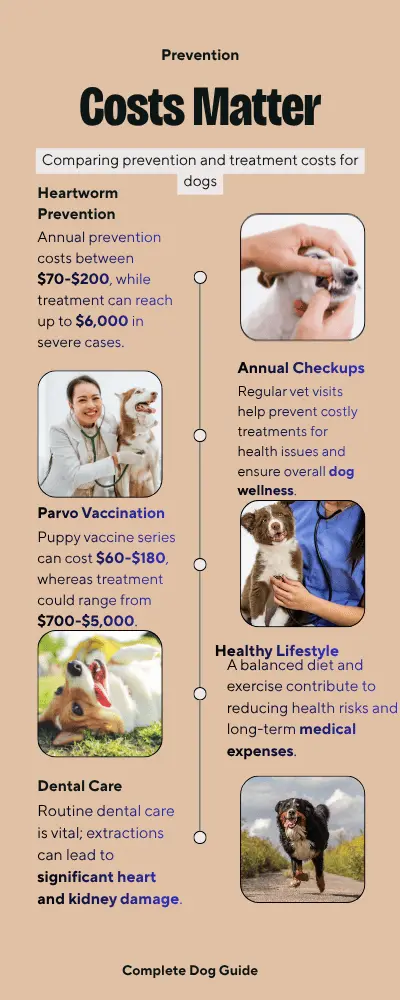
Prevention vs treatment costs for common dog illnesses. Sources: American Heartworm Society, AVMA.
Parvo tells the same story. The puppy vaccine series costs roughly $60 to $180, while treating parvo can run $700 to $5,000. And dental disease left alone becomes the four-figure extraction plus the heart and kidney damage nobody saw coming.
The cheapest emergency is the one that never happens. I break down the daily version of this in The Real Guide to Dog Care, and if you’ve got a young dog, the early choices in How to Take Care of a New Puppy shape your bills for years.
When It’s a True Emergency and You Have Nothing
Some things cannot wait. Bloat, suspected poisoning, trouble breathing, heavy bleeding, a dog who collapses. These are now, not later.
If that’s you, get your dog seen anyway, and have the money conversation in the same breath. Ask about a payment plan on the spot, ask whether they take Care-Credit or Scratch-pay, and tell them honestly what you can manage today. Emergency hospitals handle this every single night and would far rather build a plan than turn an animal away.
And if you ever reach the point where the choices feel impossible, talk to your vet about all of them openly, including the hardest ones, before you decide alone. Someone who has guided a hundred families through this will almost always see a path you can’t.
Most Asked Questions
Will a vet treat my dog if I can’t pay upfront?
Many will work with you, especially in a real emergency, though few can treat for free. Call before you arrive, explain your situation honestly, and ask directly about payment plans, Care-Credit, or Scratch-pay. Emergency hospitals handle this nightly and would rather build a plan than turn an animal away.
Does the ASPCA or Humane Society pay vet bills?
They rarely pay private bills directly, but both can point you toward low-cost clinics, and the ASPCA keeps a regional list of affordable programs. For actual grant money, apply to dedicated funds like Red-Rover Relief or Frankie’s Friends instead.
What’s the cheapest way to get my dog treated?
For routine care, try a veterinary teaching hospital, a nonprofit clinic, or a shelter wellness program. For medication, fill a written prescription at a human pharmacy or online. For a large bill, stack a grant with a low-interest payment plan.
Is Care-Credit a good idea for vet bills?
Only if you can clear the full balance before the promo period ends. Miss that deadline and you owe interest on the entire amount back to day one, around 29.99 percent. A true 0 percent option like Scratch-pay is safer.
The Bottom Line
You are not a worse owner because money is tight. The people who get through this aren’t the ones with the deepest savings. They’re the ones who ask early, ask honestly, and use every tool on the table instead of suffering in silence.
Make the call. Ask for the itemized estimate. Fill the script at Costco. Apply to the grant tonight. Your dog doesn’t need you to be rich. Your dog needs you to keep showing up, and you already are.
Veterinary and Financial Disclaimer:
This article is for educational purposes only and is not a substitute for professional veterinary or financial advice. Costs, grant programs, and financing terms vary by location and change over time, so confirm current details directly with each provider before you rely on them. If your dog has eaten something potentially harmful, contact your veterinarian or the ASPCA Animal Poison Control Center at (888) 426-4435 immediately.
About the Author
Faizan is the founder and writer behind Complete Dog Guide. With 5 years in content writing and blogging, he spends most of his research time deep in veterinary publications and official guidelines from organizations like the ASPCA, AKC, AAFCO, and the Merck Veterinary Manual. Every health-related article on this site cites real sources, because dog owners deserve better than vague internet advice.