Now Reading: Chicken and Rice for Dogs: What Actually Works (And What Most Guides Get Wrong)
- 01
Chicken and Rice for Dogs: What Actually Works (And What Most Guides Get Wrong)

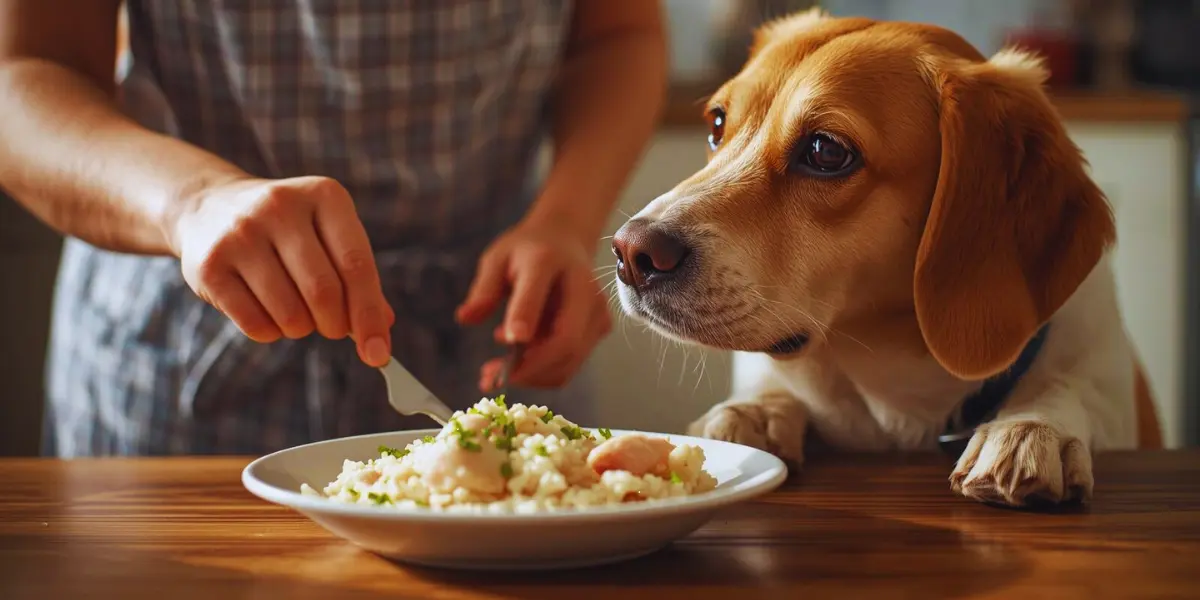
If your dog has had mild diarrhea or one or two vomiting episodes and is otherwise acting normal, plain boiled chicken breast mixed with white rice in roughly a 1:2 ratio can settle their stomach in 2 to 4 days. No salt, no oil, no broth, no garlic. Smaller portions split across the day. Switch back to regular food slowly over 3 to 4 days. If things get worse or don’t budge in 48 hours, that’s your cue to call a vet.
Why I’m Writing This (And Why Most Guides Are Useless)
Here’s the thing about most chicken-and-rice articles online. They read like someone Googled the topic for ten minutes and called it a day. The recipe gets covered. Maybe a portion chart. Done.
What’s missing is context. When does this actually help? When is it a bad idea? Why does the same recipe work brilliantly for one dog and make another worse?
I’ve spent five years writing about dog care at Complete Dog Guide. The chicken-and-rice question lands in my inbox more than almost any other food question, mostly from owners panicking after a sudden stomach upset late at night. So I sat down, pulled together what the AKC, Merck Veterinary Manual, AVMA, and AAFCO actually say, and cross-checked it against real vet Q&A threads on JustAnswer where licensed DVMs answer paying users. This is the version I wish existed when readers first started asking me about it.
Quick disclaimer before we go further. I’m not a vet. Nothing here replaces a phone call to yours.
When This Diet Actually Helps
Chicken and rice is a bland-diet protocol. The point isn’t nutrition. It’s giving an irritated gut a break.
The AKC’s bland-diet guidance describes the goal as low fat, low-fiber, and easy to digest. That’s the whole logic. Chicken breast is a lean protein. White rice breaks down fast and doesn’t add bulk. Together they’re calorie-dense enough to keep a dog fueled, gentle enough not to make things worse.
It works well in these situations:
- A bout of mild diarrhea or unusually soft stools
- One or two isolated vomiting episodes (not ongoing)
- The 24 to 48 hours after a minor surgery, once your vet clears solid food
- Easing back into normal food after a stomach upset has passed
- Garbage gut, which is the polite term for “my dog ate something off the sidewalk”
The dog should still be alert. Drinking water. Showing interest in food even if they’re picky about it. If any of that’s off, you’re already past the bland-diet stage.
When You Should Skip It Completely
This is the section most blogs don’t write because it’s not exciting and it doesn’t drive clicks. It’s also the most important part of the whole guide.
Don’t reach for chicken and rice if your dog has any of the following:
- Pancreatitis history (even lean chicken can trigger another flare)
- A known or suspected chicken allergy, which is more common than people think since chicken is the most common protein allergen in dogs
- Bloody diarrhea, black tarry stools, or vomit with blood in it
- Lethargy, hiding, or weakness alongside the GI symptoms
- Refused all water for 12+ hours
- Diabetes (white rice spikes blood sugar fast and hard)
- Age under 6 months, unless your vet specifically tells you to feed it
- Chronic conditions like IBD or kidney disease
That last one trips a lot of owners up. If your dog has been managed on a prescription diet for IBD or kidney issues, swapping it for chicken and rice for a few days can undo months of stability. Always call the vet first in those cases.
The Recipe
You’ll see fancier versions of this floating around the internet. Skip them. The whole reason this works is because it’s boring.
What you need:
- Boneless, skinless chicken breast (just the breast, not thighs or drumsticks)
- Plain white rice (jasmine or long-grain are all fine)
- Plain water
That’s the entire shopping list. No salt. No olive oil “to help digestion.” No bouillon cube. No garlic powder. No splash of milk. None of it.
Cooking the chicken
Drop the chicken breasts in a pot, cover with water, bring to a boil, then drop the heat to a simmer for 12 to 15 minutes until cooked through. Cut one open to check. The inside should be white the whole way through with zero pink.
Once it’s cool enough to handle, shred it with two forks (or your fingers) into small pieces. Bigger than the dog’s normal kibble bites but small enough to swallow easily.
Cooking the rice
Use a 1:2 rice-to-water ratio. One cup of rice to two cups of water. Bring to a boil, then simmer covered for around 18 to 20 minutes. You actually want it slightly overcooked, almost mushy. Mushy rice is easier on an irritated gut than perfectly al-dente rice.
Don’t add salt to the cooking water. I know it’s hard if you cook rice the normal way every day. Resist.
Mixing and serving
Combine 1 part chicken to 2 parts rice. Some vets actually recommend going as far as 1:3 if the dog has more severe diarrhea, since rice is the gentler component. Personally, I’d start at 1:2 and adjust based on how the first 12 hours go.
Let it cool to room temperature before serving. Hot food can aggravate an already-upset stomach. Refrigerate the rest in an airtight container for up to 3 days, or freeze single-serving portions for up to 8 weeks.
Portion Sizes (And the Mistake Most Owners Make)
Here’s the most common screw-up I see in reader emails. Someone makes a big batch, fills a bowl to where it normally sits for kibble, and the dog brings it all back up an hour later.
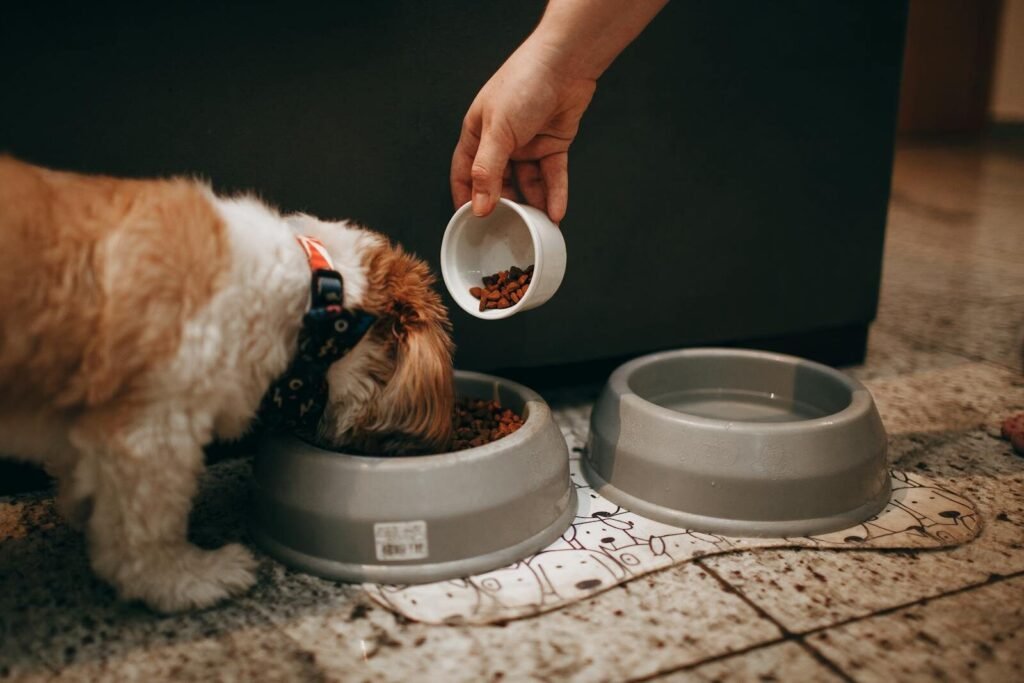
Kibble is calorie-dense and water-poor. Chicken and rice is the opposite. So you can feed slightly more by volume without overfeeding by calories, but you should feed less per meal and split into more meals across the day.
| Dog Size | Weight | Total Daily Amount | Meals Per Day |
|---|---|---|---|
| Small | 5 to 15 lbs (2 to 7 kg) | ½ to 1 cup | 4 |
| Medium | 16 to 40 lbs (7 to 18 kg) | 1 to 2 cups | 4 |
| Large | 41 to 80 lbs (18 to 36 kg) | 2 to 3 cups | 3 to 4 |
| Giant | 80+ lbs (36+ kg) | 3 to 4 cups | 3 to 4 |
Start at the lower end of each range. If the dog handles it well for the first 12 hours and you see normal stool or no stool (both fine in the first day), stay there or bump up slightly.
If they refuse the food entirely, wait half an hour and try again with a smaller amount. A dog that won’t eat anything for over 24 hours needs a vet visit, not more bland-diet attempts.
White Rice or Brown Rice? Don’t Overthink It
Brown rice has more nutrients. White rice is what you want here. The reason is fiber.
Brown rice keeps the bran and germ. That’s great for everyday digestion in a healthy dog over the long run. It’s the wrong call for an inflamed gut that’s already producing too much stool. The whole point of this diet is to give the intestines less to process, not more.
After your dog is fully recovered and back to regular food, brown rice is fine as part of balanced home-cooked meals. Just not now.
How Long to Feed It
Short. Always short.
- Mild upset that’s clearly resolving: 2 to 3 days
- Diarrhea that’s improving but not gone yet: up to 5 days
- Maximum without vet input: 7 days
Chicken and rice is not nutritionally complete by AAFCO standards. It’s missing calcium, essential fatty acids, several vitamins, and the right amino acid balance. A few days won’t matter. A few weeks will.
I’ve seen owners on dog forums say things like “my dog loved the chicken and rice so I just kept feeding it for a month.” Bad idea. By week two you’re slowly creating a new set of problems while the original one is long gone.
Switching Back to Regular Food
Don’t just dump kibble back in the bowl. The transition matters as much as the bland diet itself.
A 4-day reintroduction looks like this:
- Day 1: 75% chicken and rice, 25% regular food
- Day 2: 50/50
- Day 3: 25% chicken and rice, 75% regular food
- Day 4: Back to 100% regular food
If symptoms come back at any point, pause. Go back to chicken and rice for another day. Try the transition again, this time slower. If it fails twice, you’re past the home-fix stage and your vet needs to look at what’s actually going on. Recurring food intolerance, a low-grade infection, or a developing allergy can all hide behind what looks like a simple stomach bug.
Common Mistakes I See Constantly
After answering hundreds of reader questions on this exact topic, the same patterns show up over and over.
Using rotisserie chicken from the grocery store. It’s pre-seasoned with salt and almost always with garlic or onion powder. Both garlic and onion are toxic to dogs. This isn’t a “small amounts are fine” situation. Just skip it.
Adding “a little something” for taste. Chicken broth, butter, cheese, oil. None of it. The food being plain is the entire point.
Adding vegetables during active diarrhea. Even safe ones like carrots, pumpkin, or green beans add fiber. Save vegetables for after recovery. (For more on which vegetables are actually safe in normal feeding, my canned green beans guide covers it in detail.)
Feeding huge portions to “make up” for missed meals. This is how you restart the diarrhea cycle in 4 hours flat.
Continuing for weeks. Already covered above. Don’t.
Ignoring red flags. If there’s blood in the stool, the dog is getting weaker, the gums look pale or sticky, or vomiting is increasing, no recipe is going to help. That’s a vet call.
What If It Doesn’t Work?
The 48-hour mark is your decision point.
If you’ve been on bland diet for two full days and there’s no improvement, or things are getting worse instead of better, stop and call your vet. The Merck Veterinary Manual lists the warning signs that need professional attention: diarrhea lasting more than 48 hours, repeated vomiting (more than two or three times in a day), lethargy, blood in stool, dehydration signs (dry gums, sunken eyes, skin that stays tented when you pinch it gently), and refusal of all food and water for over 24 hours.
In those cases your vet will probably run some basic diagnostics, might prescribe metronidazole or a probiotic, and recommend a balanced gastrointestinal diet like Hill’s i/d, Royal Canin GI, or Purina EN. Those diets are formulated to be both gentle on digestion and nutritionally complete, which is the gap chicken and rice can’t fill.
Chicken and Rice vs. Prescription GI Diets
A quick comparison since this question lands in my inbox a lot:
| Chicken and Rice | Prescription GI Diet | |
|---|---|---|
| Cost | Very low | Higher (often $4 to $7 per lb) |
| Effort | Cooking required | Open the bag |
| Nutrition balance | Incomplete | Complete |
| Best use | Mild, short-term upsets | Recurring or chronic GI issues |
| Duration | 2 to 7 days | Weeks to months |
| Vet supervision | Optional for short use | Required |
If your dog has had GI flare-ups more than once or twice in 6 months, the prescription option is worth the cost. Repeated bland-diet cycles aren’t sustainable, and they’re usually masking something a workup would catch.
Special Cases
Puppies under 6 months. Their growth needs are tight. Calcium-to-phosphorus ratio matters, fat percentage matters, the entire amino acid profile matters. Even a few days of chicken and rice can shortchange them in ways that show up later. Always loop in the vet first for any puppy with GI symptoms.
Senior dogs. Most tolerate bland diet fine. Watch hydration carefully though, since older dogs dehydrate faster than younger ones. Adding a couple tablespoons of plain warm water to each meal can help if they’re not drinking enough on their own.
Chicken-allergic dogs. Skip chicken entirely. Use boiled lean turkey breast or boiled white fish (cod or tilapia work well) in the same 1:2 ratio with white rice. If you’re not sure whether your dog has a chicken sensitivity, that’s worth its own vet conversation before you guess.
Dogs on medications. Some meds need to be taken with food. Make sure the bland diet still allows for that timing.
The Honest Bottom Line
Chicken and rice is one of the most useful tricks in basic dog care. It’s also one of the most overused.
Treat it like what it actually is: a short bridge across a small bump. Plain ingredients, small portions, a few days, then back to normal food. Watch your dog the whole time, not just the food bowl.
When something feels wrong beyond a passing upset, your vet exists for exactly that reason. Trust the instinct.
For more on home feeding once your dog is healthy again, the vet-approved homemade dog food recipes on the site cover balanced meal options. And if your dog’s GI issues keep coming back, that’s a real diagnostic conversation with your vet, not another round of chicken and rice.
Frequently Asked Questions
Is chicken and rice actually good for dogs with diarrhea?
For mild cases, yes. The combination is low fat, low fiber, easy to digest, and gentle on inflamed intestines. Most vets will recommend it as a first step before reaching for medication. Just stop the diet once stools normalize, and call your vet if diarrhea lasts more than 48 hours or has blood in it.
How long can dogs eat chicken and rice?
5 to 7 days is the practical maximum without vet input. The diet is missing too much nutritionally to support a dog longer-term. Most cases of mild GI upset resolve in 2 to 3 days, and you should be transitioning back to regular food at that point anyway.
Can dogs eat chicken and rice every day forever?
No. It’s not nutritionally balanced. Long-term feeding leads to deficiencies that show up as a dull coat, low energy, slower healing, and weakened immunity. It’s a recovery food, not a forever food.
Is rotisserie chicken okay if I’m in a hurry?
No, and this is one of the most common mistakes. Store-bought rotisserie chicken is loaded with salt and almost always seasoned with garlic and onion powder. Garlic and onion are toxic to dogs. Spend the 15 minutes boiling plain breast instead.
What about brown rice?
White rice for sick dogs. Brown rice has too much fiber, which is the opposite of what an inflamed gut needs. Brown rice is fine for healthy dogs in normal balanced meals, just not during an upset.
My dog won’t eat the chicken and rice. Now what?
A picky day or two is normal, especially if the dog isn’t feeling well. But total food refusal for over 24 hours, especially with other symptoms, is a vet call. Don’t force-feed. You can warm the food slightly to bring out the smell, which sometimes helps a reluctant eater.
Is plain boiled chicken safe?
Yes, as long as it’s plain (no salt, oil, seasonings, or sauces), boneless, skinless, and fully cooked through. Cooked chicken bones are dangerous because they splinter. Stick with breast meat boiled in plain water.
Sources
- AKC: Bland Diet for Dogs
- Merck Veterinary Manual: Diarrhea in Dogs
- AAFCO: Nutrient Requirements for Dogs
- ASPCA: People Foods to Avoid Feeding Your Pets
- AVMA: Pet Owner Resources
Veterinary Disclaimer
This guide is for general information only and does not replace professional veterinary advice. If your dog has eaten something potentially toxic, contact your vet or call the ASPCA Animal Poison Control Center at (888) 426-4435 right away.
About the Author
Faizan Imran is the founder and writer behind Complete Dog Guide, a research-driven blog covering dog food, training, grooming, and care. Over 5 years of writing in this niche, he has referenced veterinary publications including the AKC, ASPCA, AAFCO, AVMA, and the Merck Veterinary Manual to keep every health article tied to credible sources. He is not a licensed veterinarian, and Complete Dog Guide does not provide veterinary advice. For health concerns, your vet is always the right call.