Now Reading: How Do You Get Dog Hair Out of a Blanket Easily
- 01
How Do You Get Dog Hair Out of a Blanket Easily

Dog hair has a special talent for weaving itself deep into blankets, especially fleece, microfiber, and throws that your dog loves most. If you’ve ever washed a blanket only to pull it out still covered in fur, you’re not alone. The problem isn’t your washing machine. It’s the method.
This guide breaks down exactly how to get dog hair out of a blanket, using practical, fabric-safe techniques that work before, during, and even without washing. Whether you’re dealing with light shedding or blankets packed with embedded fur, you’ll find a solution that actually sticks.
How Do You Get Dog Hair Out of a Blanket?
Remove as much hair as possible while the blanket is dry using a rubber brush, a dryer’s air-fluff cycle, or shaking it outdoors. Then wash separately with white vinegar and finish with dryer balls to lift any remaining fur.
Why Dog Hair Sticks to Blankets So Badly
Dog hair clings to blankets because of a mix of static electricity, fabric texture, and hair structure.
Some fabrics, like fleece and microfiber, have dense fibers that grab onto hair. Add static from heat and movement, and the hair locks in place. Short, stiff dog hair is even worse because it embeds itself deeper than long hair.
That is why washing alone often fails. Water doesn’t remove static, and agitation can actually push hair further into the fibers.
The Biggest Mistake Most People Make
Throwing a hair-covered blanket straight into the washer.
When you skip pre-removal:
- Hair spreads to other laundry
- Washer filters clog faster
- You need multiple wash cycles
- Blankets come out still hairy
- Shedding increases if your dog has long nails, which can loosen more fur into blankets
The key is removing as much hair as possible before water ever touches the fabric.
Step 1: Remove Dog Hair Before Washing (Most Important)
This step alone solves most problems.
Shake the Blanket Outside
Take the blanket outdoors and snap it hard a few times.
It removes loose surface hair and prevents it from clogging your washer or dryer lint trap.
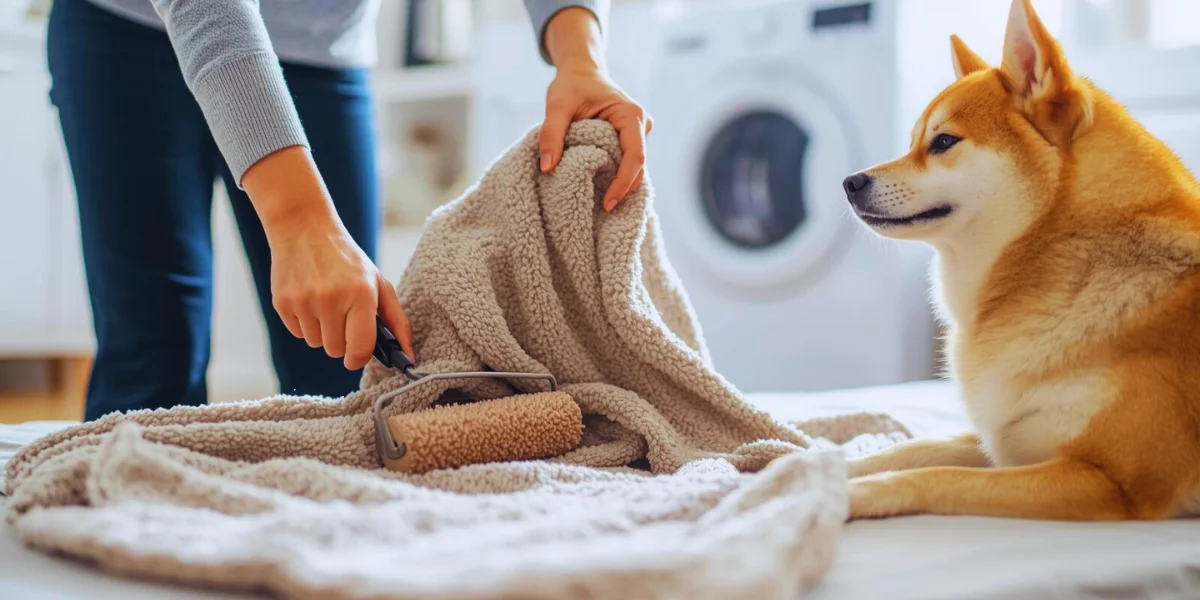
Use a Rubber Tool (Best Overall Method)
Rubber creates friction that fabric tools can’t.
Best options:
- Rubber pet hair brush
- Silicone grooming brush
- Window squeegee
Lay the blanket flat and drag the rubber tool in one direction. You’ll see hair collect into clumps almost instantly.
It works especially well on:
- Fleece blankets
- Microfiber throws
- Dog bed covers
Dry the Blanket Before Washing
It sounds backward, but it works.
Put the blanket in the dryer for 10–15 minutes on:
- Air fluff, or
- Low heat
The tumbling action loosens embedded hair, and static pulls it off the fabric.
Clean the lint trap immediately after. You’ll be surprised how much hair comes out.
Step 2: Washing Methods That Actually Work
Once most of the hair is gone, washing becomes effective rather than frustrating.
Use White Vinegar Instead of Fabric Softener
Add ½ cup distilled white vinegar to the fabric softener compartment.
Why it works:
- Relaxes fabric fibers
- Reduces static electricity
- Helps the remaining hair release
There’s no vinegar smell after drying. Avoid fabric softener sheets. They leave residue that increases static and makes hair cling more next time.
Choose the Right Water Temperature
- Cold or warm water works best
- Hot water can set hair deeper into some fabrics
Always wash dog blankets separately to prevent hair transfer.
Don’t Overload the Machine
Blankets need space to move. Overloading traps hair instead of flushing it out.
Step 3: Dryer Techniques That Remove Embedded Hair
Drying is where most hair removal actually happens.
Use Dryer Balls
Wool or rubber dryer balls:
- Reduce static
- Knock hair loose during tumbling
- Improve airflow
Use 3–6 balls for large blankets.
Clean the Lint Trap More Than Once
For heavy-shedding dogs, pause mid-cycle and clean the lint trap again. This improves airflow and hair capture.
No-Wash Methods (When You Can’t Use the Washer)
Sometimes washing isn’t an option—especially for wool or delicate throws.
Rubber Gloves Trick
Slightly dampen the rubber gloves, then rub your hands over the blanket. Hair clumps together and lifts off easily.
Microfiber Cloth Method
Lightly dampen a microfiber cloth and wipe in one direction. Works well for couch blankets and quick cleanups.
Vacuum with a Brush Attachment
Use low suction and a fabric-safe brush head. It works best for surface hair, not deeply embedded fur.
Fabric-Specific Solutions (This Matters)
Fleece Blankets
- Rubber brush first
- Dryer air-fluff cycle
- Vinegar wash
- Avoid high heat, it increases static.
Microfiber Blankets
- Rubber tools work best
- Minimal water agitation
- Dryer balls recommended
Cotton Blankets
- Easier to clean
- Vinegar wash + dryer balls works well
Wool Blankets
- Avoid washing unless the label allows
- Use a lint brush or vacuum
- Air dry only
Weighted Blankets
- Remove hair without washing if possible
- Dry-only hair removal
- Water can damage internal beads.
Tools That Actually Help (And What to Skip)
Worth Using
- Rubber pet hair removers
- Dryer balls
- Silicone brushes
- Microfiber cloths
Not Worth It
- Fabric softener sheets
- Cheap sticky rollers for large blankets
- High heat drying on fleece or wool
Can Dog Hair Damage Your Washing Machine?
Yes, over time.
Excess hair can:
- Clog washing machine filters
- Block dryer vents
- Reduce appliance efficiency
Removing hair before washing protects your machines and saves money on repairs.
When Home Methods Aren’t Enough
For extreme shedding or oversized blankets:
- Large-capacity laundromats handle pet bedding better
- Some pet groomers offer blanket cleaning advice or tools
- Pet supply stores often sell professional-grade hair removers
These options are especially useful for multi-dog homes.
How to Prevent Dog Hair Buildup on Blankets
Prevention saves more time than cleaning.
- Brush your dog regularly
- Use washable dog throws on furniture
- Keep one “dog-only” blanket
- Shake blankets outdoors daily
Reducing shedding at the source makes every method work better.
FAQ’s
Q: Does Washing Alone Remove Dog Hair from Blankets?
No. Washing without pre-removal often spreads hair and leaves much of it behind.
Q: Is it Better to Dry or Wash Blankets First?
Dry first. Drying loosens hair, so washing can actually remove it.
Q: Does Vinegar Really Help with Dog Hair?
Yes. Vinegar reduces static and relaxes fibers, allowing hair to release.
Q: Can Dog Hair Clog Washing Machines?
Yes. Over time, hair can block filters and drainage systems.
Q: What Fabric Attracts the Most Dog Hair?
Fleece and microfiber trap the most hair due to dense fibers and static.
Q: Are Dryer Sheets Good for Pet Hair?
No. They leave residue that increases static and future hair buildup.
Q: Can I Vacuum Dog Hair Off Blankets?
Yes, but only with a brush attachment and low suction. It works best for surface hair.
Q: How do Groomers Remove Dog Hair from Bedding?
They remove hair dry first, often using rubber tools or dryers, then wash separately.
Closing Remarks
Getting dog hair out of a blanket isn’t about washing harder, it’s about using the right order and tools. Remove hair while the blanket is dry, use friction instead of sticky tools, and let the dryer do most of the work before water ever touches the fabric.
Once you follow this process, even heavily shed blankets come out clean, soft, and hair-free, without damaging your laundry or appliances.
Veterinary Disclaimer: This article is for educational purposes only and does not replace professional veterinary advice. If your dog has eaten something potentially harmful, contact your veterinarian or the ASPCA Animal Poison Control Center at (888) 426-4435 immediately.
About the Author
Faizan is the founder and writer behind Complete Dog Guide, a blog dedicated to helping dog owners with practical, well-researched information on dog food, care, grooming, and training. With 5 years of experience in content writing and blogging, he spends hours digging through veterinary publications, official guidelines from organizations like the ASPCA, AKC, AAFCO, and the Merck Veterinary Manual to make sure every article is backed by reliable sources.
Complete Dog Guide does not provide veterinary advice. Every health-related article on this site is researched using published veterinary data and clearly cites its sources. If your dog has eaten something harmful, always contact your veterinarian first.