Now Reading: Can Dogs Eat Canned Green Beans Safely?
- 01
Can Dogs Eat Canned Green Beans Safely?

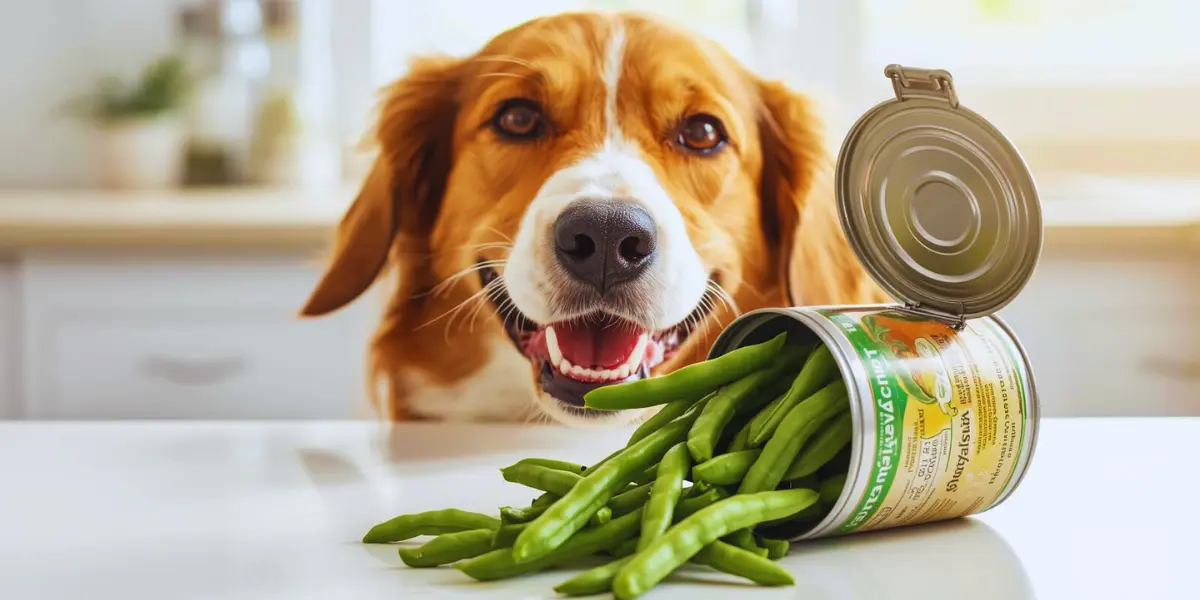
Last week, I got an email from a reader asking if she could share her can of green beans with her Labrador. She had the can in her hand, dog at her feet, and just needed a yes or no.
So here is the short version: yes, but only if the can says “no salt added” and the ingredient list is just green beans and water. Drain it, rinse it for 30 seconds, and serve plain. Skip anything seasoned, Italian-style, or regular salted, especially if your dog has heart or kidney issues.
That covers most situations. But if you want the actual reasoning, what to buy, and what to do if your dog already wolfed down half a can, keep reading. I have spent more time than I’d like to admit going through veterinary nutrition guidelines for this one.
Why the Can Matters More Than the Beans
The bean itself is fine. Vets put green beans on the list of safe vegetables for dogs all the time. It is the canning process that causes problems.
Three things to actually worry about.
Sodium: A standard can of green beans usually carries around 380 mg of sodium per half cup. According to the National Research Council’s guidelines for canine nutrition, a 30-pound dog should only get about 100 mg of sodium total per day. So one serving of regular canned green beans puts your dog over the limit, before you even count their kibble.
Onion and garlic: Both are toxic to dogs. The ASPCA Animal Poison Control Center classifies them as harmful in any form, raw or cooked or powdered. If a can says “Italian-style,” “seasoned,” or “with garlic,” put it back. This is not me being paranoid. Allium toxicity damages red blood cells and can take 24 to 72 hours to show symptoms, which is why people miss it.
Random additives: Calcium chloride is fine. EDTA in trace amounts is fine. MSG, “natural flavours,” and seasoning blends are not. When in doubt, fewer ingredients win.
The Brand Question, Where Most Articles Fall Short
When I was researching this article, I noticed almost every other site said “check the label” without telling readers which labels actually pass. So I went and pulled the sodium numbers from the major US grocery brands directly off their nutrition labels.
| Brand (½ cup serving) | Sodium | My take |
|---|---|---|
| Green Giant Cut No Salt Added | 15 mg (naturally occurring) | Yes, top pick |
| Great Value No Salt Added Cut Green Beans | 15 mg | Yes, budget pick |
| Del Monte No Salt Added Cut Green Beans | 10 mg | Yes, easy to find |
| Green Giant Low Sodium Cut | 120 mg | Only for healthy dogs |
| Del Monte 50% Reduced Sodium | 200 mg | Only for healthy dogs |
| Del Monte Cut Green Beans (regular, sea salt) | 380 mg | Skip |
| Green Giant Cut Sea Salt | 380 mg | Skip |
| Great Value Cut (regular) | 290 mg | Skip |
| Any “Seasoned” or “Southern Classics” style | 460 mg+ with garlic, pork flavour | Hard no |
A caveat: brand formulations can shift over time. Always glance at the actual Nutrition Facts panel on the can in your hand before buying.
Honestly though, if you want the simplest path, buy a bag of plain frozen green beans (Birds Eye Steam-fresh plain, Hanover frozen plain, your store’s house brand) and skip the cans entirely. Frozen plain beans usually have 0mg added sodium, no rinsing needed, and they last forever in the freezer. I end up recommending this more often than the canned route.
How to Prep a Can Properly
Even with no-salt-added beans, the canning liquid sits there for months picking up trace minerals and whatever else. Do not just dump it on the food.
Here is the routine that works:
- Open the can. Drain it completely.
- Tip the beans into a strainer.
- Run cold water over them for 30 seconds. Rinsing canned vegetables can cut residual sodium by 20 to 40 percent.
- Pat dry with a paper towel.
- Chop the beans up if your dog is a gulper.
- Serve plain. No butter, no oil, no sprinkle of anything.
Mix into kibble or hand them out as training treats. That’s it.
Portions, Without the Lazy “In Moderation” Advice
Most blogs say feed green beans “in moderation” and stop there. Useless. Here is roughly what works, based on the standard 10 percent rule for treats:
| Dog Weight | Daily Maximum |
|---|---|
| Under 10 lbs | 1 tablespoon |
| 10 to 25 lbs | 2 to 3 tablespoons |
| 25 to 50 lbs | ¼ cup |
| 50 to 90 lbs | ⅓ to ½ cup |
| Over 90 lbs | ½ cup |
If your dog has never had green beans, give half the table amount the first time. If they get gassy or have a soft stool the next day, pull back. That isn’t the food being unsafe. It is just fiber hitting a digestive system that wasn’t expecting it.
Should You Try the Green Bean Diet?
Let me be straight about something. The “green bean diet,” where people replace 25 to 50 percent of their dog’s kibble with canned green beans to slim them down, gets recommended a lot in dog forums. It works in the short term. I am still hesitant to recommend it.
When you replace that much kibble, you are also cutting protein, calcium, and the balanced nutrition that AAFCO-formulated dog food gives you. Do this for too long and you risk deficiencies, especially in small breeds and seniors.
What I tell readers instead: replace 10 to 15 percent of the kibble volume with rinsed plain green beans. Keep the rest of the diet intact. Weigh your dog every two weeks. If the weight is not moving, talk to your vet about a real prescription weight-management food. Hill’s Metabolic and Royal Canin Satiety are designed for this and don’t leave nutritional gaps.
The Association for Pet Obesity Prevention reports around 59 percent of US dogs are overweight or obese. So weight loss comes up a lot. But the answer is not always “more vegetables, less kibble.”
Can Dogs Eat Quail Eggs? If you want to know just read me.
When You Need to Be More Careful
A few situations where the general advice above does not cover you:
Heart disease, especially congestive heart failure. Sodium restriction is critical here. Even rinsed canned beans might push your dog over their daily limit. Frozen plain or fresh is safer, ideally cleared with your cardiologist first.
Chronic kidney disease:
Same deal. Frozen or fresh only, low sodium, vet-approved portions.
Diabetes:
Green beans actually fit well. Low carb, low calorie, no blood sugar spike. Decent training treats.
Pancreatitis history:
Plain green beans are fine. Just nothing canned in oil or butter.
Sensitive stomach:
Introduce slowly. Some dogs just do not tolerate legumes, and that is okay. Try carrots or plain pumpkin instead.
What If My Dog Already Ate a Whole Can?
This is the question that lands in my inbox most often. The answer depends entirely on which kind of can.
No-salt-added can: Loose stool, probably some gas, possibly a sad-looking dog for an evening. Make sure water is available. Most dogs bounce back within 24 hours. No vet visit unless symptoms get unusual.
Regular salted can: Watch for excessive thirst, vomiting, restlessness, or wobbly walking. These can be early signs of sodium ion poisoning. Call your vet. The ASPCA Animal Poison Control hotline is (888) 426-4435. There is a consultation fee, but it is worth it for peace of mind.
Seasoned can with onion or garlic: Do not wait. Call your vet right away, even if your dog seems fine. Allium toxicity can take 24 to 72 hours to show up, and early treatment matters a lot.
Canned vs Fresh vs Frozen, My Honest Ranking
If you regularly feed your dog vegetables, this matters more than people realise.
- Frozen plain. Cheap, no added sodium, no labels to read, lasts forever in the freezer. What I recommend most.
- Fresh. Best nutrient retention if you actually use them before they go bad in the fridge.
- Canned no-salt-added. Convenient and shelf-stable, but you have to rinse and read labels.
- Regular canned. Skip.
Things Readers Always Ask
Can puppies eat them?
Tiny amounts after 12 weeks are fine. But puppies need calorie-dense food for growth, so do not try to “bulk out” puppy food with green beans.
Every day, okay?
Small daily amounts are fine for most healthy adult dogs. I would rotate vegetables once in a while though. Variety matters, and green beans every single day probably gets boring for the dog too.
Is organic worth the extra money?
Not for dogs. Organic does not fix the sodium issue. A no-salt-added regular can beats a salted organic can every time.
My dog refuses to eat them. Help.
Try lightly steaming them for two minutes to bring out the flavour. Or chop and mix into a teaspoon of plain Greek yogurt or low-sodium chicken broth. If they still refuse, no big deal. Carrots and pumpkin work too.
Other vegetables to avoid completely?
Onions, garlic, chives, leeks, raw potato, rhubarb leaves, unripe tomatoes. The AKC has a longer list worth bookmarking.
So, Should You Feed Them?
Here is the bottom line. If you have a no-salt-added can in front of you, your dog is healthy, and you just want to give them a low-calorie treat, go ahead. Drain, rinse, serve plain, keep the portion reasonable.
If your dog has heart or kidney issues, default to frozen plain or fresh. The risk is not worth it.
And if you ever find yourself stuck at the grocery store staring at six different cans, the test is simple. Does the ingredient list say only green beans and water? Is the sodium under 30mg? Then it is fine for your dog. Anything else, leave it.
I would rather you feed your dog something safe and boring than something exciting and risky. Their kidneys will thank you for it later.
This article is based on my research from veterinary sources and is not a replacement for professional veterinary advice. If your dog has eaten something that worries you, contact your vet or the ASPCA Animal Poison Control Center at (888) 426-4435 right away.
About the Author
Faizan is the founder and writer behind Complete Dog Guide, a blog dedicated to helping dog owners with practical, well-researched information on dog food, care, grooming, and training. With 5 years of experience in content writing and blogging, he spends hours digging through veterinary publications, official guidelines from organizations like the ASPCA, AKC, AAFCO, and the Merck Veterinary Manual to make sure every article is backed by reliable sources.