Now Reading: Can Dogs Eat Jelly? What Actually Happens (and What To Do)
- 01
Can Dogs Eat Jelly? What Actually Happens (and What To Do)

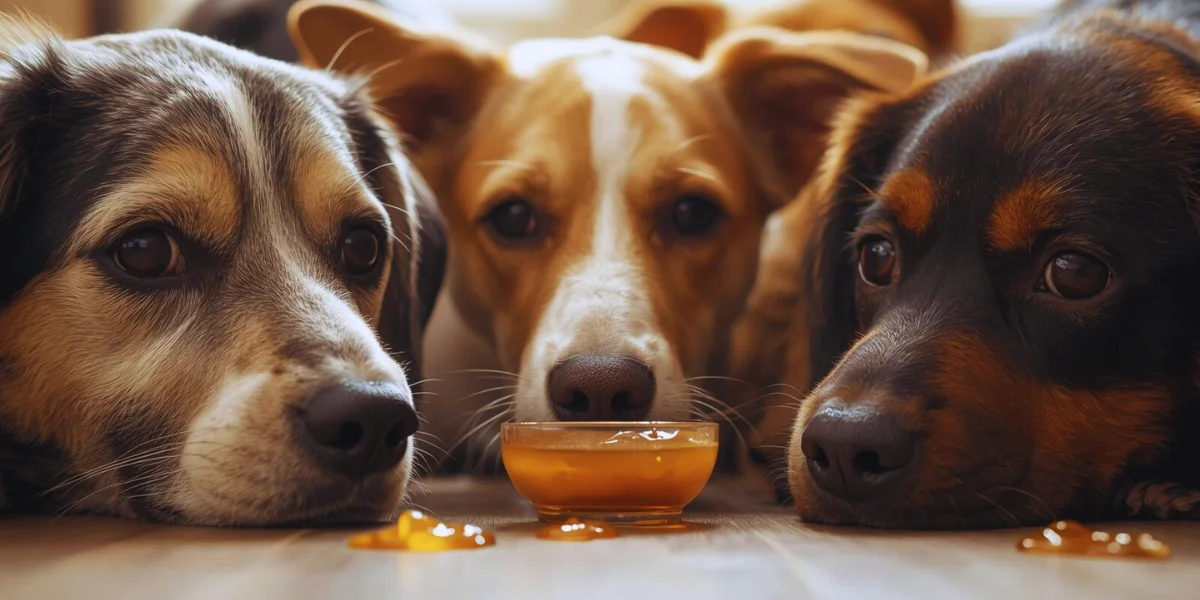
My neighbour’s dog pulled this exact stunt last August. Beagle named Biscuit, eight years old, allegedly a reformed counter-surfer who relapsed spectacularly when nobody was watching. Half a jar of Smucker’s strawberry, gone. His owner called the vet in a panic, read off the ingredients, and the vet basically said keep an eye on him and expect a messy 24 hours. That was it. No emergency, no IV, no drama. Biscuit got some loose stools and learned nothing.
Now flip that story. Same Beagle, same jar, except this time the label says “sugar-free.” That is a completely different phone call. That is a race to the clinic.
This is the thing about jelly. One word on the label changes everything. So when people ask me, “Can dogs eat jelly?” and want a simple yes or no, I can’t give them one. What I can do is walk you through what actually matters, what doesn’t, and what to do if your dog got into the jar five minutes ago.
Short version if you’re in a hurry: no, don’t give your dog jelly. Skip to the emergency section if that’s why you’re reading this.
The Only Three Things on the Label That Matter
Ignore most of what’s printed on a jar of jelly. Pectin won’t hurt your dog. Citric acid isn’t either. The fruit juice is usually fine. Cane sugar isn’t great, but a lick of it isn’t landing anyone in the hospital.
What will land your dog in the hospital is xylitol, grapes, or a lot of sugar all at once. In that order of urgency.
Xylitol is the one vets lose sleep over. It’s a sugar substitute humans eat without thinking twice, and dogs process it in the worst possible way. Their body reads xylitol as a huge sugar hit and dumps insulin. Except there’s no actual sugar to match that insulin, so blood sugar crashes fast. Think 10 to 60 minutes fast. Higher doses then go after the liver, and liver failure can show up anywhere from 24 to 72 hours later.
Want the scary number? The ASPCA says about 0.1 grams of xylitol per kilo of body weight is enough to drop blood sugar dangerously low. That works out to roughly one gram for a 10 kg dog. A single teaspoon of xylitol-sweetened jelly can carry more than that. Sometimes in one lick if the dog was enthusiastic.
Words on the label that should make you freeze: “sugar-free,” “no sugar added,” “keto friendly,” “diabetic friendly,” or ingredients listed as xylitol, birch sugar, birch sweetener, or E967. If any of those show up and your dog got into the jar, stop reading this article and call your vet.
Grapes are the other red line. Grape jelly is concentrated grape juice turned into a spread, which is basically grape toxicity in spoon-able form. What’s weird about grape toxicity is that nobody fully understands it yet. Researchers suspect tartaric acid. Some dogs seem resistant, some drop with a small handful. There’s no reliable toxic dose anyone can point you to, which is exactly why vets treat every grape exposure like it’s the one that tips the wrong way. A tablespoon of grape jelly is worth a phone call. Don’t play odds on this one.
Regular sugar is the boring villain. It won’t kill your dog tonight, but it’s a big part of why more than half of American dogs are overweight, according to the Association for Pet Obesity Prevention. Jelly is around 50% sugar by weight, which is genuinely a wild number when you stop and think about it. Years of casual “just a taste” turn into pancreatitis, diabetes, and dental bills that make you wish you’d just bought the dog a ball instead.
If Your Dog Already Ate Some
You’re probably here because something already happened. Let me skip the lecture.
First thing, go get the jar. Not a guess, the actual jar. Read the ingredients list with your own eyes, looking for xylitol, birch sugar, any sugar alcohol, or anything with the word grape in it.
If you see xylitol or grape anything, call your vet now. If your vet is closed, call the ASPCA Animal Poison Control Center at 888-426-4435. They charge a consultation fee, but the vet you eventually see will want their case number anyway, so it’s worth doing. Don’t wait for symptoms. Waiting is how good outcomes turn into bad ones.
If the label is clean (real sugar, no grapes), you’re in the boring version of this story. Offer fresh water, maybe skip the next meal to let the stomach settle, and watch for vomiting or ongoing diarrhea. Small dogs who got into a lot might act tired for a few hours. That’s usually the sugar crash, and it passes on its own. If symptoms stretch past 24 hours, call the vet then.
Don’t try to make your dog throw up at home. Hydrogen peroxide advice floats around the internet, and it’s bad advice in most situations. Let your vet make that call.
Three things to write down before you call: your dog’s weight, roughly how much jelly went in, and how long ago it happened. Vets need those numbers.
What You’ll See If Things Go Wrong
Symptoms depend on what the jelly actually had in it.
With xylitol, the first thing is usually vomiting, then weakness, then wobbliness that looks a little like your dog had a drink. Tremors and seizures can follow. Most early signs show up inside an hour. Gums may look pale and much later yellow, which means liver damage has already set in.
With grape jelly, symptoms lag. Six to twelve hours is typical before anything shows. Repeated vomiting, refusing food, diarrhea, and reduced urination. That last one is the scariest because it means the kidneys are struggling. The unsettling part is that dogs can look fine the next morning and still be in trouble. Blood-work tells the real story.
With plain sugary jelly, expect the standard collection of minor digestive complaints and nothing worse. Loose stools, maybe some vomiting, thirst, then they move on with their lives.
Is Homemade Jelly Any Better?
A little. Not actually good, but a little. You control what goes in it, which means no xylitol and no grapes, which removes the real emergencies from the equation. But homemade jelly still needs a massive amount of sugar to set properly and keep. It’s still sugar in a jar with a thin fruit disguise.
Nutritionally, your dog gets nothing useful from jelly. If you want them to taste a strawberry, give them a strawberry.
The Jelly vs Jam vs Preserves vs Marmalade Thing
Texture differs. Risk doesn’t. Jelly uses strained fruit juice, jam uses crushed fruit, preserves keep chunks, and marmalade uses citrus peel. All four come with a heavy sugar load. All four have “reduced sugar” versions that might contain xylitol. Grape versions of any of them are off the table.
Read the label. That’s the whole rule.
The Peanut Butter and Jelly Trap
A lot of owners hand their dog a bite of PB and J because peanut butter is a classic dog-friendly food. Here’s the part people miss: some peanut butter brands now contain xylitol, too. Especially the “natural” or “reduced sugar” ones. So if the jelly is the reduced sugar kind and the peanut butter is also the reduced sugar kind, you’ve just handed your dog a double hit of a toxin you didn’t even know was in the house.
I keep one jar of plain, xylitol-free peanut butter in the house specifically for the dog. Not expensive, and worth doing.
Petroleum Jelly Is Not the Same Thing
Quick tangent because this catches people out. Vaseline isn’t fruit jelly. If your dog licked some off a paw or off their nose after you applied it, don’t worry. Petroleum jelly isn’t toxic. Big quantities can cause loose stools, but there’s no emergency here. The word “jelly” is where the overlap begins and ends.
What To Give Instead
If your dog has a sweet tooth (and most do), just give them fruit. Real fruit.
Blueberries are my top pick, and honestly, they’re almost a cheat code. Tiny, low-calorie, antioxidant heavy, most dogs love them, frozen ones double as summer treats. I drop them into training sessions by the handful.
Watermelon works too, just take out the seeds and the rind first. Mostly water, gently sweet, perfect for hot afternoons.
Banana slices are fine in moderation, and “in moderation” genuinely matters because bananas are surprisingly calorie dense for their size. Better as a training reward than a sit-down snack.
Unsweetened applesauce is weirdly useful. A spoonful stirred into food gets picky eaters to eat. Freeze it into ice cube trays for summer. Just make absolutely sure the label says unsweetened, because sweetened applesauce is often… yeah, you can guess where this sentence is going.
Pumpkin puree (plain, not the pie filling with spices baked in) is another one, and it actually helps if your dog has mild digestive trouble.
Vet nutritionists usually cap treats at under 10% of daily calories. That includes fruit. Fruit isn’t a free pass.
If you want a wider look at feeding, I’ve put together 5 vet-approved homemade dog food recipes. For another sweet food that trips up a lot of owners, check can dogs eat banana pudding.
The Thing Nobody Really Wants To Hear
The one-time jelly lick isn’t the real problem. The pattern is. Owners who give their dogs small bits of human food for years, because it feels loving, because the dog looks happy, because it’s just a little. It adds up. Pancreatitis hospitalisations aren’t cheap. Canine diabetes isn’t cheap, and it’s for life. Dental cleanings for dogs with rotted teeth from years of sugar exposure run into serious money too.
Your dog genuinely doesn’t know what jelly is. Your dog knows what you hand over. Every treat is a small vote for the kind of life they’ll have at ten, twelve, fourteen years old.
Quick Questions People Keep Asking
Can dogs eat a tiny bit of jelly?
A healthy adult dog who takes one lick of regular jelly (no xylitol, no grape) probably won’t be harmed. That’s not the same as saying you should do it on purpose.
Can puppies eat jelly?
No. Small body weight, developing systems, and concentrated sugar is a bad combination.
Can dogs eat strawberry jelly?
Strawberries are safe, strawberry jelly is mostly sugar. Give actual strawberries instead.
Can dogs eat grape jelly?
Never. Not a taste, not a lick off the knife, not a smear left on a plate. Grape anything is off limits.
My dog ate sugar-free jelly, what now?
Stop reading, call your vet. Sugar-free almost always means xylitol in practice.
Can I use jelly to hide a pill?
Don’t. Pill pockets, a bit of banana, or plain xylitol-free peanut butter work better and safer.
Can dogs eat Jell-O?
Flavoured Jell-O has the same issues as jelly: sugar, artificial colour, sometimes xylitol. Plain unflavoured gelatin in small amounts is actually fine and sometimes used for joint support, but flavoured packet mixes are not.
Concluding Words
Jelly isn’t something your dog should be eating. At best it’s empty sugar. At worst it’s xylitol or grape jelly, and those are emergency-room problems. Keep the jar out of reach, read every label, and if your dog does get into something, the jar goes with you to the phone. Faster matters more than calm.
Your dog will be just as happy with a blueberry. Honestly, probably happier, because you’ll actually share it with them.
Disclaimer: This article is for informational purposes only and does not replace professional veterinary advice. If your dog has eaten something concerning, contact your veterinarian or the ASPCA Animal Poison Control Center (888-426-4435) right away.
About the Author: Faizan is the founder of Complete Dog Guide. With five years of experience writing about dog care, nutrition, training, and grooming, he researches each article using veterinary publications and official guidelines from the ASPCA, AKC, AAFCO, and the Merck Veterinary Manual.