Now Reading: Dogs and Kids Safety: The Age-by-Age Guide Every Parent Needs 2026
- 01
Dogs and Kids Safety: The Age-by-Age Guide Every Parent Needs 2026


The sweet Labrador who licked your face during the adoption visit? He might growl at your toddler by Thursday.
Not because he is aggressive. Not because you chose the wrong breed. But because your 3-year-old just stuck a finger in his ear while he was eating, and nobody taught either of them how to handle that moment.
Every year, roughly 4.5 million dog bites occur in the United States, according to the American Veterinary Medical Association (AVMA). More than half of those bites happen to children under 12. And the dog involved is almost always the family pet or a dog the child knows.
This is not a breed problem. This is a preparation problem.
This guide is not another “top 10 breeds for families” list. You can find our family breed comparison here if that is what you need. This guide is about something more important: how to make any dog safe around your kids, how to read the warning signs before something goes wrong, and how to teach your child to be safe around dogs.
Because the best family dog is not always the most popular breed. It is the one that matches your child’s age, your home’s energy, and your ability to supervise.
Why “Best Breed” Lists Miss the Point
Google “best dogs for kids” and you will find 200 articles saying the same thing. Labrador Retriever. Golden Retriever. Beagle. Poodle. Copy, paste, repeat.
Those breeds are great. We recommend several of them in our family dog breed guide. But breed alone does not make a dog safe around children.
The American Kennel Club (AKC) has said it repeatedly: individual temperament, socialization history, and the household environment matter more than breed labels.
Here is a scenario that plays out in homes across America every week.
A family adopts a Golden Retriever because “Goldens are great with kids.” They bring the dog home. The kids are excited. The dog is overwhelmed. Nobody sets boundaries. The 4-year-old chases the dog around the house. The dog starts hiding under the bed. Two weeks later, the dog snaps.
And the family says: “But he was supposed to be good with kids.”
He probably is good with kids. He was just never given the space to prove it.
Breed gives you a starting point. Preparation gives you safety.
What Actually Makes a Dog Safe Around Kids
Forget the breed chart for a minute. A dog that is safe around children, regardless of breed, typically shows these traits:
High tolerance for unpredictable touch: Kids grab ears. They pull tails. They hug too tight. A safe dog tolerates accidental rough handling without snapping. This is not something a dog is born with. It is trained and socialized, usually between 3 and 14 weeks of age.
Recovery speed: A safe family dog gets startled by a loud noise or a sudden grab and recovers within seconds. A dog that stays tense, freezes, or retreats after a surprise is a dog that needs more space from children.
Soft mouth: Some dogs naturally have a “soft mouth,” meaning they take treats gently and do not clamp down during play. Retrievers were literally bred for this. Dogs that play rough with their mouths need extra training before being around small hands.
Social confidence: A confident dog walks into a room full of noise, kids, and chaos and stays relaxed. An anxious dog in the same room goes into survival mode. Confidence comes from early socialization, and the ASPCA lists it as one of the strongest predictors of how well a dog adapts to family life.
Willingness to walk away: This one surprises people. The safest family dogs are not the ones that tolerate everything. They are the ones that calmly leave the room when they have had enough. A dog that walks away is a dog that is managing his own stress. That is healthy. A dog that stays and endures until he cannot take it anymore is a bite risk.
Best Dog Temperament by Child Age
This is where most guides fail. They give you a breed list and call it a day. But a dog that is perfect for a teenager might be completely wrong for a toddler.
Toddlers (Ages 1 to 3)
Let me be blunt. Toddlers are, from a dog’s perspective, tiny unpredictable humans who move erratically, scream without warning, and grab anything within reach.
A dog living with a toddler needs:
- Extreme patience. Not just “good temperament” but saint-level tolerance for being poked, climbed on, and startled.
- Large enough body. Sounds surprising, but very small dogs are actually riskier with toddlers. A Chihuahua can be seriously hurt by a toddler falling on him, and a hurt dog is a biting dog.
- Low prey drive. Dogs with strong chase instincts can be triggered by a toddler running and screaming. That is not aggression. That is instinct. But the result is the same.
Breeds that tend to do well: Golden Retrievers, Labrador Retrievers, New-found-lands, Bernese Mountain Dogs.
Critical rule: No toddler should ever be left alone with any dog. Not for 10 seconds. Not while you answer the phone. Not ever. The AVMA and every veterinary behaviorist on the planet agrees on this one.
School-Age Kids (Ages 4 to 10)
This is the sweet spot for dog ownership. Kids in this age range can start learning real responsibility and basic dog interaction rules.
A dog for this age group needs:
- Matching energy. A lazy Basset Hound will bore an active 7-year-old. A hyperactive Border Collie will overwhelm a quiet, bookish child. Match the energy.
- Trainability. This is the age where kids can participate in training sessions. A dog that responds well to commands gives the child a sense of control and builds mutual respect between them.
- Playfulness without roughness. The dog should enjoy fetch, chase, and tug without escalating to mouthing or jumping.
Breeds that tend to do well: Beagles, Poodles (Standard or Miniature), Cavalier King Charles Spaniels, Cocker Spaniels, Boxers.
Teachable moment for this age: A child who learns to read a dog’s body language at age 6 will carry that skill for life. More on that below.
Teenagers (Ages 11+)
Teenagers are basically small adults as far as dogs are concerned. The safety risks drop dramatically, but the bonding potential goes up.
A dog for a teen needs:
- Loyalty and companionship focus. Teens often want a “their” dog. Breeds that bond deeply with one person work well here.
- Exercise compatibility. Active teens do well with running partners. Chill teens do well with couch companions.
- Some independence. A dog that can handle being alone during school hours without destroying the house is essential.
Breeds that tend to do well: German Shepherds, Australian Shepherds, Labrador Retrievers, Greyhounds (surprisingly calm indoors), mixed breeds from shelters.
📎 If your teen is responsible enough for solo dog walks and feeding, this is a great time to teach basic training commands together.
5 Warning Signs a Dog Is Uncomfortable Around Your Child
Most dog bites do not come “out of nowhere.” The dog warned. Nobody noticed.
The American Veterinary Society of Animal Behavior (AVSAB) describes these as “distance-increasing signals,” meaning the dog is communicating that he needs space.
Learn these. Teach your kids these. Print them on your fridge if you have to.
1. The Freeze
Your child reaches for the dog and the dog stops moving completely. No tail wag. No head turn. Just stillness.
This is not calmness. This is a dog making a decision. If the pressure continues, the next step is usually a snap.
What to do: Remove your child immediately. Do not wait to see what happens next.
2. Whale Eye (Half-Moon Eye)
When a dog turns his head away but keeps his eyes on your child, you will see the whites of his eyes in a crescent shape. This is called “whale eye.”
It means: “I am watching you because I do not trust what you are about to do.”
What to do: Create distance. Redirect your child to another activity.
3. Lip Licking When Not Eating
A dog licking his lips when there is no food around is self-soothing. It is a stress signal.
If your child is sitting next to the dog and the dog starts lip-licking repeatedly, he is uncomfortable.
What to do: Give the dog space. Do not force the interaction.
4. Yawning Repeatedly
Dogs yawn when they are tired, obviously. But repeated yawning in a social situation is a displacement behavior, meaning the dog is anxious and trying to cope.
What to do: End the interaction. Let the dog retreat to his safe space.
5. Turning Away or Walking Away
This is actually a good sign in disguise. A dog that walks away is choosing de-escalation. He is solving the problem himself.
What NOT to do: Do not follow him. Do not let your child follow him. Do not drag him back to “try again.” Respect the exit.
Bite Prevention: Rules Every Parent Needs
The AVMA’s dog bite prevention resources are the gold standard here. Their data shows that most bites to children are preventable with basic awareness.
Here are the non-negotiable rules:
Rule 1: Never leave a child under 6 alone with any dog.
Any dog. Any breed. Any temperament. Any history. No exceptions. This is not about your dog being “bad.” This is about children being unpredictable and dogs having teeth.
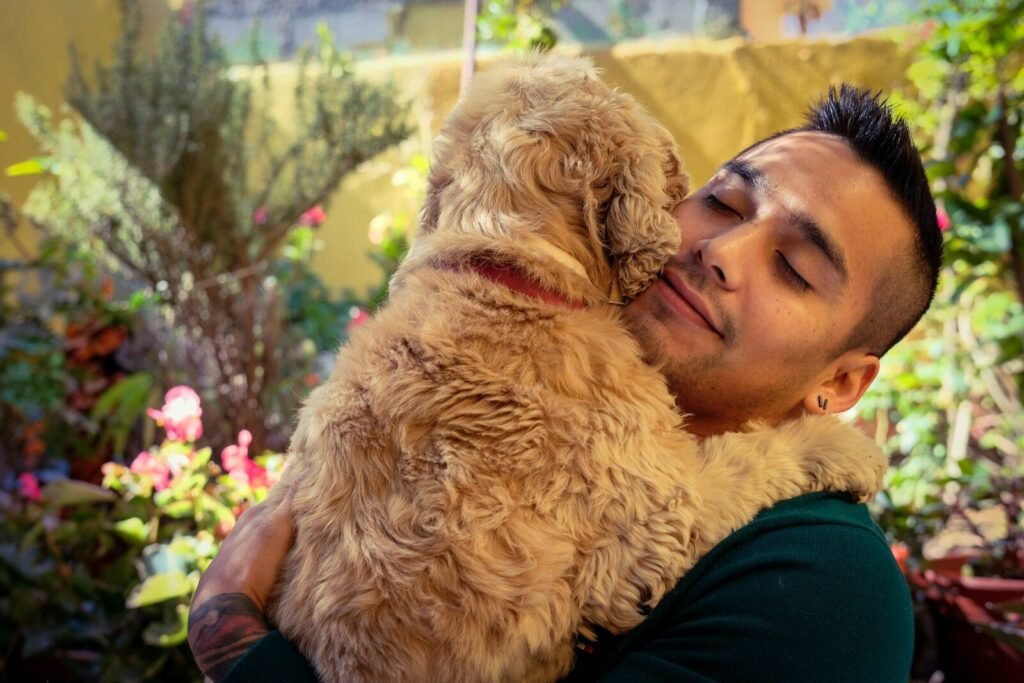
Rule 2: No hugging the dog.
Kids love to hug dogs. Dogs hate being hugged. Research published in Psychology Today analyzed hundreds of photos of children hugging dogs and found that over 80% of the dogs showed visible stress signals.
A hug pins a dog’s body and removes his ability to escape. That is threatening, no matter how gently your child does it.
Teach your child to pet the do’s side or chest instead.
Rule 3: Leave the dog alone while eating or sleeping.
A dog guarding his food bowl is not aggressive. He is behaving normally from a canine perspective. The problem is a child who walks up to a dog mid-meal and tries to grab kibble.
Feed the dog in a separate room if you have toddlers. Non-negotiable.
Rule 4: No running and screaming around a new dog.
Sudden movements and high-pitched noises trigger prey drive in many breeds. This does not mean your dog is dangerous. It means he is a dog.
Calm introductions only.
Rule 5: Teach “ask first, pet second.”
Before your child touches any dog, they should ask the owner. Before touching your own dog, they should let the dog sniff their hand first.
This single habit prevents more bites than any breed selection ever could.
Teaching Kids How to Behave Around Dogs
This is the section that should be in every “best dogs for kids” article but almost never is.
You can pick the perfect breed. You can socialize the dog beautifully. But if your child does not know how to interact with a dog, none of that matters.
For Ages 2 to 4: Keep It Simple
Toddlers cannot understand complex rules. Give them two:
- “Gentle hands.” Show them how to stroke softly. Practice on a stuffed animal first.
- “When doggy walks away, we let him go.”
That is it. Everything else is your job as the supervising adult.
For Ages 5 to 8: Build the Skills
This is the prime learning window. Teach them:
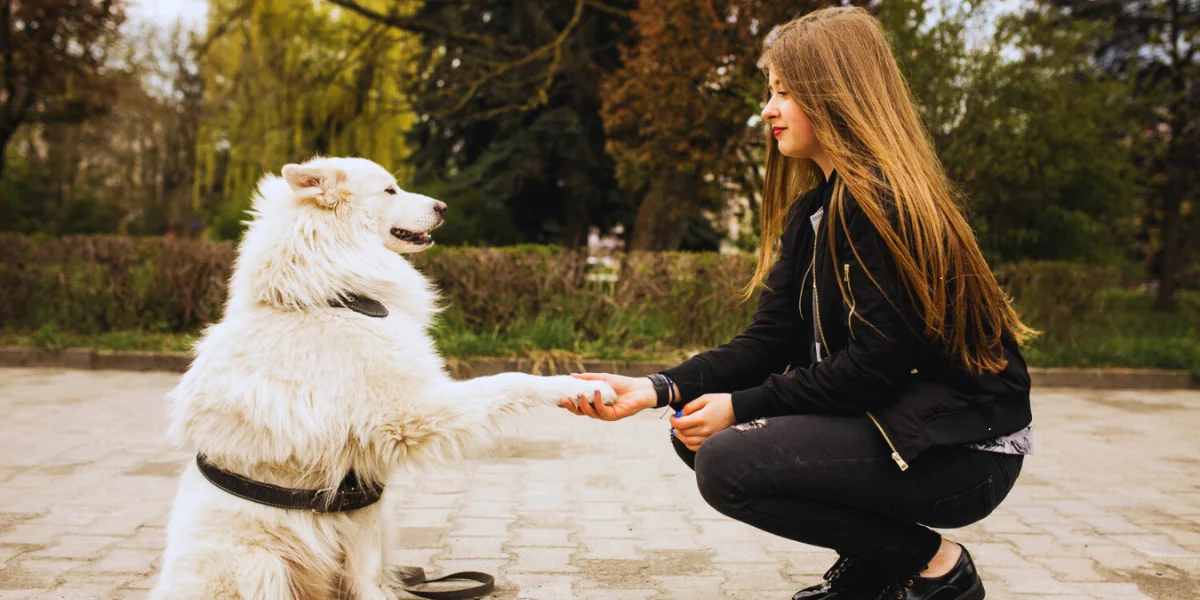
- How to approach a dog: From the side, not head-on. Let the dog sniff your fist first (closed fist, not open fingers).
- Where to pet: Chest and shoulders, not head and tail. Most dogs do not enjoy being patted on top of the head, despite what every movie shows.
- How to read “happy” vs “scared”: Relaxed body and wiggly tail means happy. Stiff body and tucked tail means scared or uncomfortable.
- The “be a tree” rule: If a strange dog approaches and your child feels scared, teach them to stand still, arms at sides, eyes down. No running. Running triggers chase.
For Ages 9+: Real Responsibility
Older kids can start:
- Walking the dog on leash (with adult nearby at first)
- Participating in training sessions
- Feeding on a schedule
- Learning to recognize stress signals independently
The goal is to build a child who respects dogs as animals with boundaries, not toys that breathe.
What to Do If a Dog Snaps at Your Child
First: do not panic. And do not punish the dog.
A snap (air bite with no contact) is actually communication. The dog is saying: “I already warned you with my body language and nobody listened, so here is a louder warning.”
Immediate steps:
- Separate child and dog calmly. No yelling. No hitting the dog.
- Check the child for any marks or broken skin.
- Put the dog in a separate room to decompress. Not as punishment. As stress relief.
- Talk to the child about what happened. Ask: “What were you doing when the dog snapped?” This is not about blame. It is about learning.
If skin is broken:
- Clean the wound with soap and water immediately.
- Contact your pediatrician, even if it looks minor. Dog bite infections are common and can escalate quickly.
- Contact a certified veterinary behaviorist for a professional assessment of the dog.
If there is no contact:
This is a warning, not an attack. Do not rehome the dog based on a single air snap. Instead, assess what triggered it and adjust the environment.
The ASPCA’s behavioral resources provide excellent guidance on understanding why snapping happens and how to prevent escalation.
Breeds That Need Extra Caution Around Young Kids
This is not a “bad breeds” list. There are no bad breeds. But some breeds have traits that require more experienced handling around small children.
High prey drive breeds: Huskies, Akitas, and some terrier breeds have strong chase instincts that can be triggered by running, squealing children. These dogs can be wonderful family pets with proper training, but they are not beginner dogs for homes with toddlers.
Guarding breeds: Rottweilers, Dobermans, and German Shepherds are loyal and protective. That protection instinct, however, can sometimes extend to guarding family members from other children visiting the home, which can create awkward and potentially dangerous situations without proper socialization.
Very small breeds: Chihuahuas, Yorkies, and Toy Poodles are physically fragile. A toddler falling on a 4-pound dog can seriously injure the dog, and an injured dog bites. If you have kids under 5, consider a medium or large breed instead.
Anxious or nervous dogs: This is not breed-specific. Any dog with an anxious temperament needs careful management around children. If you are adopting a rescue, ask the shelter about the dog’s history with kids specifically.
When to Get Professional Help
Not every family needs a trainer. But some situations call for one.
Call a certified dog trainer if:
- Your dog consistently avoids your child
- Your dog growls regularly during family interactions
- Your child is afraid of the dog despite positive introductions
- You adopted a rescue and are unsure of his history with children
Call a veterinary behaviorist if:
- Your dog has bitten (with contact) more than once
- The dog shows aggression specifically toward children but not adults
- You notice sudden behavioral changes (could indicate pain or neurological issues)
The American College of Veterinary Behaviorists (DACVB) maintains a directory of board-certified specialists. These are veterinarians with advanced training in animal behaviour, not just dog trainers with a certificate.
Early intervention is always better than waiting for a serious incident.
The One Thing That Matters More Than Breed
You can pick the highest-rated family breed in the world. You can read every article, watch every video, and buy every training book.
But none of it replaces this: supervision, education, and respect.
Supervise every interaction until your child is old enough to reliably read a dog’s body language.
Educate your child on how to touch, approach, and respect a dog’s space.
And respect the dog as an animal with needs, boundaries, and limits, not a toy, not a babysitter, not a prop for Instagram.
Families that get this right rarely have problems, regardless of breed.
Families that skip this step are the ones who end up in the emergency room saying: “He never did that before.”
He probably warned them. Nobody was watching.
Sources referenced: American Veterinary Medical Association (AVMA) dog bite prevention statistics and guidelines; American Kennel Club (AKC) breed temperament resources; American Society for the Prevention of Cruelty to Animals (ASPCA) behavioral guidance; American Veterinary Society of Animal Behavior (AVSAB) position statements; American College of Veterinary Behaviorists (DACVB) specialist directory.
This article is for informational purposes only and does not replace professional veterinary or behavioral advice. Always consult a qualified veterinarian or certified animal behaviorist for concerns about your dog’s behavior around children.
About the Author
Faizan is the founder and writer behind Complete Dog Guide, a blog dedicated to helping dog owners with practical, well-researched information on dog food, care, grooming, and training. With 5 years of experience in content writing and blogging, he spends hours digging through veterinary publications, official guidelines from organizations like the ASPCA, AKC, AAFCO, and the Merck Veterinary Manual to make sure every article is backed by reliable sources.
Complete Dog Guide does not provide veterinary advice. Every health-related article on this site is researched using published veterinary data and clearly cites its sources. If your dog has eaten something harmful, always contact your veterinarian first.